Last updated October 15, 2026
How to Hire a ADU Contractor in Long Beach: A Step-by-Step Guide
California’s CSLB license lookup tells you a license is active, but it doesn’t tell you whether the person standing on your property is actually the license holder. In Long Beach, where accessory dwelling units now account for a growing share of residential construction, that gap between a paper credential and the human being holding a hammer has cost homeowners tens of thousands of dollars in unbonded work, abandoned projects, and substandard builds that failed inspection. This guide walks you through a concrete vetting sequence that most generic “ask for references” advice never touches. By the time you sign a contract, you’ll know exactly who is coming to your property, what their credentials actually prove, and how to lock in a price that won’t drift.
Quick Answer
Hiring an ADU contractor in Long Beach comes down to a three-document verification stack before any money changes hands: an active CSLB license certificate, a certificate of insurance naming you as additional insured, and a photo ID that matches the license holder. (For a deeper look at the full process, see our ADU Permits, Codes & Inspections in CA: What You Need to Know.) Beyond that, you want a written fixed-price bid (not a cost-plus estimate), transparency about every subcontractor who will step onto your property, and confirmation that the contractor pulls Long Beach permits under their own license instead of asking you to pull them as owner-builder.
Table of Contents
- The Three-Document Verification Stack
- How to Check a Contractor’s Long Beach Permit History
- Fixed-Price Bids vs. Cost-Plus Estimates
- The Subcontractor Transparency Question
- Red Flags Specific to the Long Beach ADU Market
- Prefab, Modular, and Site-Built: Which ADU Product Line Fits Your Lot
- Common Mistakes to Avoid
- When to Call a Professional
- Frequently Asked Questions
- The Bottom Line
The Three-Document Verification Stack
Before you let any contractor onto your Long Beach property for even a first walkthrough, ask for three documents. Not one, not a verbal promise. Three. Each serves a different purpose, and together they close the most dangerous gap in the ADU hiring process: the gap between the license you looked up and the person who actually shows up.
Document One: The CSLB License Certificate
The California Contractors State License Board (CSLB) maintains a public database of every licensed contractor in the state. Go to the CSLB website, enter the license number the contractor gives you, and verify three things: the license status says “Active,” the classification covers residential building (Class B – General Building is standard for ADU work), and the name on the license matches the name of the person or company you’re negotiating with. A license that’s been active for ten or fifteen years tells you something about stability. A license that’s two months old with a name that doesn’t match the person on the phone tells you something else entirely.
In Long Beach specifically, there’s an additional layer worth checking: the city’s own contractor registration. Long Beach requires contractors working on residential projects to register with the city’s Development Services Department. A contractor who has never registered with the city may still be technically licensed by the state, but they haven’t gone through the local vetting step that signals they actually work in Long Beach rather than passing through.
Document Two: The Certificate of Insurance Naming You as Additional Insured
Ask for a certificate of insurance (COI) from the contractor’s insurance carrier. But here’s the part most homeowners miss: you need to be named as an additional insured on the policy, not just listed as a certificate holder. The difference is substantial. A certificate holder simply receives notice if the policy is cancelled. An additional insured has actual coverage under the policy if something goes wrong on your property, for example, if a worker is injured and files a claim that names you.
Verify that the policy covers at least general liability and workers’ compensation. Workers’ comp matters because if a contractor doesn’t carry it and a worker gets hurt on your property, you can be held liable as the property owner. In ADU construction, where you’ll have multiple people on your property for months, this is not a theoretical risk. Ask the insurance carrier directly to confirm the policy is active. Some contractors hand over COIs from policies that lapsed six months ago.
Document Three: A Photo ID Matching the License
This is the step almost no one does, and it’s the step that separates a verifiable professional from a paper shell. Ask the contractor to send you a photo of their state-issued ID alongside their CSLB license certificate. The name must match. The face must match the person who shows up for the walkthrough. If a contractor is reluctant to do this, that is your answer. A legitimate operator who has been doing this for years will not blink at proving they are who they say they are.
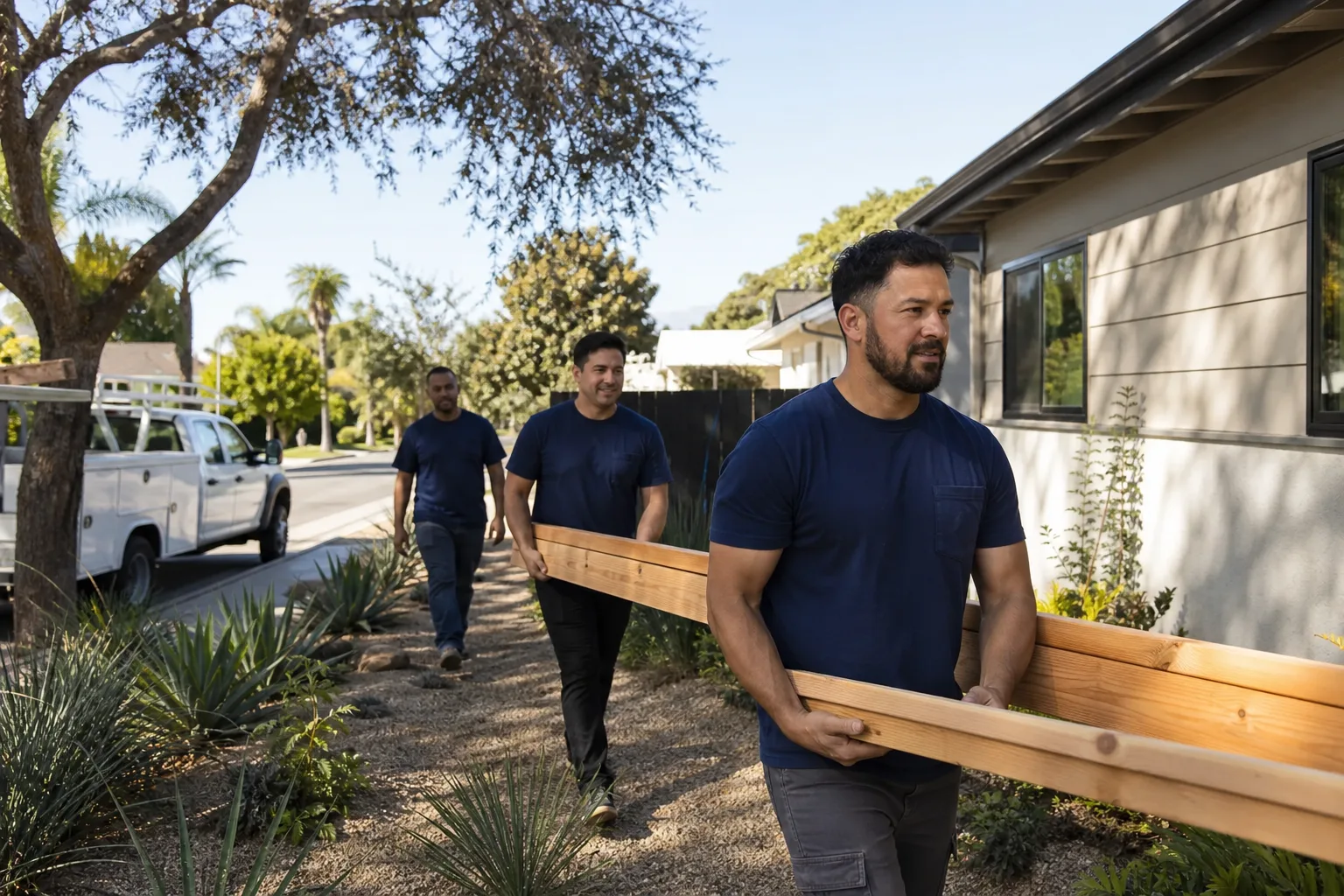
This is what the Threshold Standard was built around: every technician who arrives on a Sutton ADU Long Beach project has already been background-checked, identity-verified, and photo-badged. You get their name and photo before they arrive, and they show a photo ID badge at the door, every time. It’s a system, not a promise, and it exists because we’ve seen what happens when it isn’t in place. Learn more about how we apply this standard across every ADU build in Long Beach.
How to Check a Contractor’s Long Beach Permit History
Long Beach maintains a public permit portal through its Development Services Department where you can search building permit records by address, contractor name, or permit number. This is a free step, it takes about ten minutes, and it reveals more about a contractor’s actual working habits than any reference call ever will.
Why Permit History Matters More Than References
A contractor who pulls permits under their own license on every ADU project is signaling that they follow the rules, they understand Long Beach’s specific code requirements, and they’re not asking homeowners to take on legal liability by pulling permits as owner-builder. A contractor with a sparse permit history, or permits pulled under different business names, or a history of projects where the homeowner pulled the permit, is signaling something else.
Here’s the step-by-step:
- Go to the Long Beach Development Services permit portal.
- Search by the contractor’s business name and by the license number they gave you.
- Look at the last five years. How many residential permits do you see? How many ADU-specific permits?
- Open individual permit records. Were they finalized and signed off, or are they still open with expired statuses?
- Check whether the properties match the areas of Long Beach the contractor says they work in. A contractor who claims deep experience in Bixby Knolls or Belmont Heights should have permits in those neighborhoods.
One thing we’ve noticed over the years: contractors who consistently pull permits in Long Beach tend to have smoother projects. They know which city inspectors they’ll be working with, they understand the coastal zone overlay requirements, and they’ve already navigated the LADWP coordination that trips up first-timers. When you check permit history, you’re not just verifying compliance. You’re verifying local competence.
Fixed-Price Bids vs. Cost-Plus Estimates
Most ADU horror stories about budgets ballooning out of control come down to one contract structure: the cost-plus estimate. Here’s how the two structures actually work, and which one protects you when lumber prices shift or a trench reveals unexpected soil conditions.
Cost-Plus: The Open-Ended Estimate
A cost-plus estimate says the homeowner pays the actual cost of labor and materials, plus a percentage markup for the contractor, usually 15% to 25%. It sounds transparent. It is not. The contractor has no incentive to control costs, because every dollar of overrun increases their markup. If the project runs two months long, the labor costs climb, and so does the contractor’s fee. You, the homeowner, absorb all of that risk. The estimate you were given at the start was just a guess with a friendly face.
Fixed-Price: The Written Price Locked In Before Work Starts
A fixed-price bid states a total cost for the defined scope of work, in writing, before any construction begins. The contractor absorbs the risk of cost overruns from their own misestimation. Change orders can still happen (you decide mid-project to upgrade your fixtures, for example), but those are agreed on in writing and signed by you before any additional work proceeds. The key phrase to look for in the contract is “fixed price” or “lump sum,” and the key phrase to avoid is “cost plus” or “time and materials.”
Every project we take on at Sutton ADU Long Beach includes a written price delivered before any work starts. Not an estimate range. A written price. It’s the same approach we use across our home addition projects in Long Beach, because a homeowner who knows their total cost before signing is a homeowner who can plan their financing, their timeline, and their life around the project. A vague estimate doesn’t let you do any of that.
The Subcontractor Transparency Question
Here’s a question that almost no homeowner thinks to ask until it’s too late: “Who specifically will be on my property, and can you give me those names and credentials in writing before work begins?”
Most ADU contractors use subcontractors for at least some of the work: electrical, plumbing, roofing, and often the concrete pour. That’s normal and not a red flag in itself. The red flag is when the contractor cannot or will not tell you who those people are. When you sign a contract with a company, you’re making a judgment about who is coming to your home. If the company can’t tell you who’s coming, you haven’t actually made that judgment.
Ask for a written list of every subcontractor that will work on your ADU, including:
- Company name and CSLB license number (if applicable)
- The name of the project lead from that company
- What specific scope they’ll be handling
- Proof of their own insurance coverage
- When they’re scheduled to be on site
A contractor who refuses to provide this information, or who gives you vague reassurances that “our regular guys will handle it,” is asking you to take a bigger risk than you agreed to. At Sutton ADU Long Beach, every person who steps onto your property has been background-checked and identity-verified under the Threshold Standard. You’ll know their name and see their face before they arrive. That applies to subcontracted crews too, not just our direct employees. If you’re comparing approaches, start with our Sutton ADU Long Beach home page to understand how we structure the entire build process.
Red Flags Specific to the Long Beach ADU Market
Long Beach has its own ADU-specific patterns of contractor misbehavior. These are the things we hear about from homeowners who call us after a bad experience, and they’re worth knowing before you start taking bids.
Red Flag One: Claiming Permit Exemptions That Don’t Exist
Some contractors tell homeowners that ADUs under 500 square feet don’t require permits in Long Beach, or that a detached ADU can be built under a “shed permit” if it’s small enough. That is not blanket-accurate. Long Beach follows California state ADU law, which still requires building permits for any habitable structure, regardless of size. The city does offer some streamlined permitting for smaller ADUs, but streamlined does not mean exempt. A contractor who tells you to skip permits is asking you to take on massive legal and financial exposure. If the structure is uninhabitable or fails inspection later, you’re the one with an unpermitted dwelling on your property that can block a future sale or refinance.
Red Flag Two: Quotes That Ignore LADWP Utility Coordination
Every detached ADU in Long Beach needs utility connections: electrical service, water, and sewer. Those connections go through the Los Angeles Department of Water and Power (LADWP), and the coordination process takes time, usually weeks and sometimes months depending on the scope. A contractor who quotes you a suspiciously fast timeline (like a full detached ADU finished in 90 days) is probably skipping the LADWP step in their plan, which means it will hit mid-project and blow up the schedule. Ask every bidder to walk you through their LADWP coordination plan specifically. If they don’t have one, that’s a red flag.
Red Flag Three: Pressure to Pull Permits as Owner-Builder
Some contractors suggest the homeowner pull the building permit as an “owner-builder” arrangement. The pitch is usually that it saves time or keeps the project under the contractor’s insurance limits. What it actually does is transfer legal liability for the construction from the contractor to you. If something goes wrong, you’re the responsible party in the eyes of the city and the courts. A legitimate ADU contractor pulls permits under their own license. That’s what the license is for.
Red Flag Four: No Long Beach Address or Local References
An ADU contractor who works in Long Beach should have an address in Long Beach or a neighboring city, references from Long Beach homeowners, and familiarity with the city’s specific requirements: the coastal zone overlay, the parking replacement rules, the historic district regulations in neighborhoods like Bluff Park and Rose Park. A contractor from 60 miles away who has “done ADUs all over Southern California” may be entirely competent, but they’re less likely to have the local relationships and code familiarity that keep a Long Beach project moving through inspection cleanly.
Prefab, Modular, and Site-Built: Which ADU Product Line Fits Your Lot
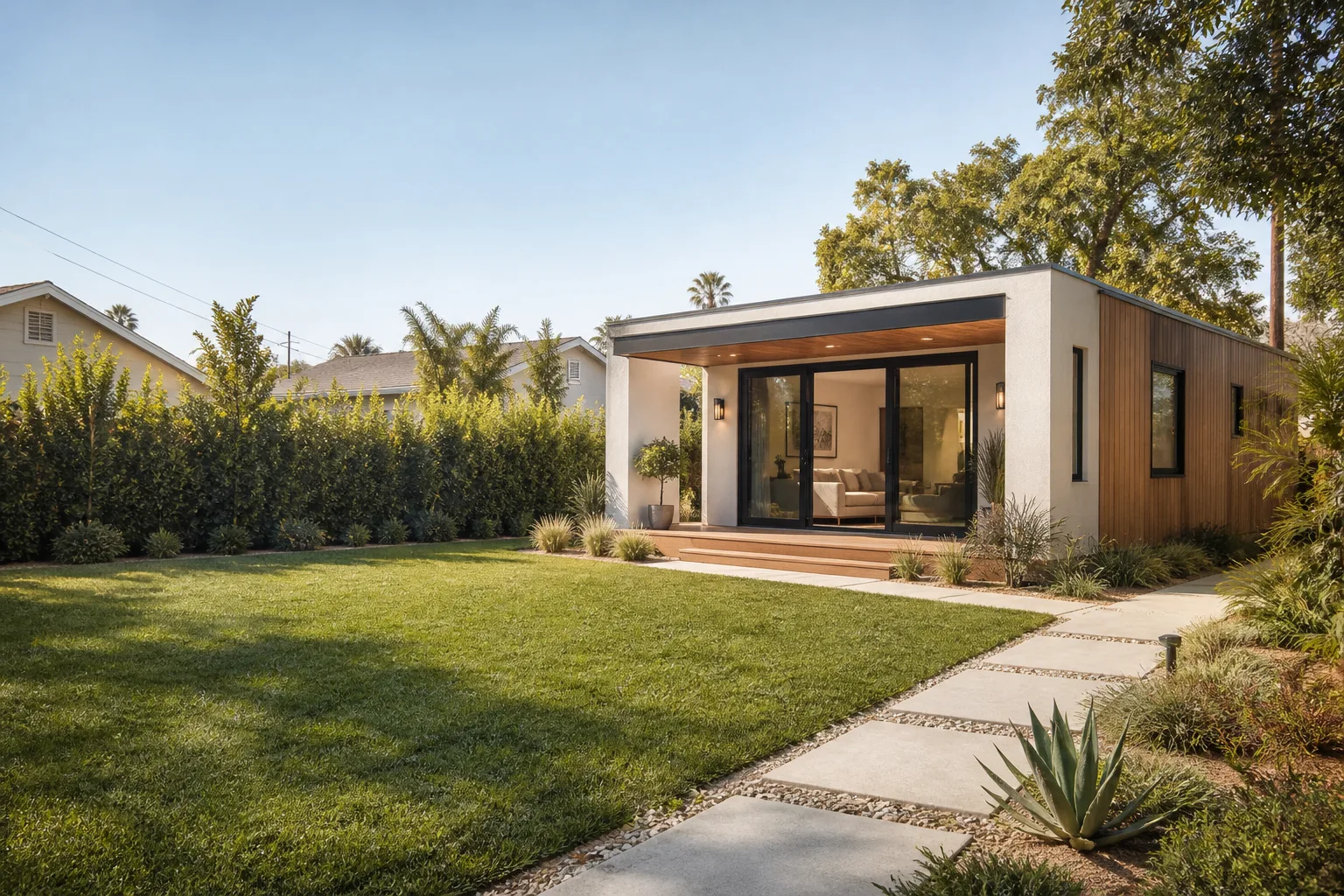
Long Beach homeowners now have more ADU construction options than ever, and the choice between them affects your budget, your timeline, and your contractor selection process. For a detailed look at expected expenses, see our ADU Cost Breakdown: The Long Beach Homeowner’s Reference for 2026. Here’s a plain-language breakdown.
Prefab and Modular ADUs
Companies like Boxabl and Plant Prefab build ADU modules in factories, ship them to your lot, and a local contractor handles site work, foundations, utility connections, and finishing. The appeal is speed and factory consistency. The tradeoffs are real: not every Long Beach lot can accommodate a factory-built unit (tight setbacks, access issues for crane delivery, overhead utility lines), and the local contractor still has to be solid at the site work, or the whole project stalls.
We’ve worked with several of these product lines and can give you an honest read on which one fits your specific lot and budget, rather than defaulting to whatever brand we happen to have a dealership agreement with. That matters more than most homeowners realize. A prefab unit that’s perfect for a wide, flat lot in Lakewood Village might be a poor fit for a narrow, sloped lot in Signal Hill’s shadow. Get a contractor who has actually worked with the product line you’re considering, not one who’s learning on your project.
Garage Conversions and Tuff Shed Structures
For homeowners with an existing detached garage, a conversion can be the most cost-effective ADU path. The structure is already there; you’re adding insulation, drywall, plumbing, electrical, and a proper foundation upgrade if needed. Long Beach allows garage conversions under the same ADU rules as new construction, though you’ll need to address the parking replacement question if your garage currently houses a car. Year-round maintenance matters too-see our Seasonal ADU Care for Long Beach: Year-Round Homeowner’s Guide.
Tuff Shed and similar pre-built structures occupy a gray zone. A standard Tuff Shed is not a habitable structure and cannot be legally used as an ADU without substantial upgrades (foundation, insulation, wiring, plumbing, egress windows) that often make it more expensive than starting fresh. Some Long Beach homeowners have been talked into “Tuff Shed conversions” by contractors promising a cheap ADU. In our experience, the math rarely works out once you add the legal and code requirements for a habitable dwelling. But there are specific scenarios where a custom-built structure with James Hardie cladding and proper foundation work makes sense, particularly for a room addition in Long Beach rather than a full independent ADU.
Common Mistakes to Avoid
- Hiring the first bidder without checking permit history. A contractor can be friendly, responsive, and completely unqualified. The Long Beach permit portal is free and takes ten minutes. Use it before you sign anything.
- Signing a cost-plus contract. You absorb every overage, and the contractor gets paid more when the project runs long. Fixed price is the only contract structure that aligns incentives properly.
- Skipping the additional-insured step on the COI. A certificate holder designation tells you the policy exists. Additional insured tells you it covers you. These are not the same thing, and the difference matters when a worker gets injured on your property.
- Pulling permits as owner-builder to “save money.” The legal liability you take on is worth far more than any savings. A legitimate contractor pulls permits under their own license every time.
- Believing a timeline that doesn’t account for LADWP coordination. Utility connections through LADWP take weeks at minimum. A quote that ignores this step is either lying or naive, and either way you’re the one who suffers when the schedule slips.
- Not asking for subcontractor names in writing. You’re letting strangers onto your property for months. You deserve to know who they are before they arrive.
- Choosing a contractor who won’t show you a photo ID matching their license. This takes thirty seconds to provide and costs nothing. Refusal is the clearest signal you’ll get about how the rest of the project will go.
When to Call a Professional
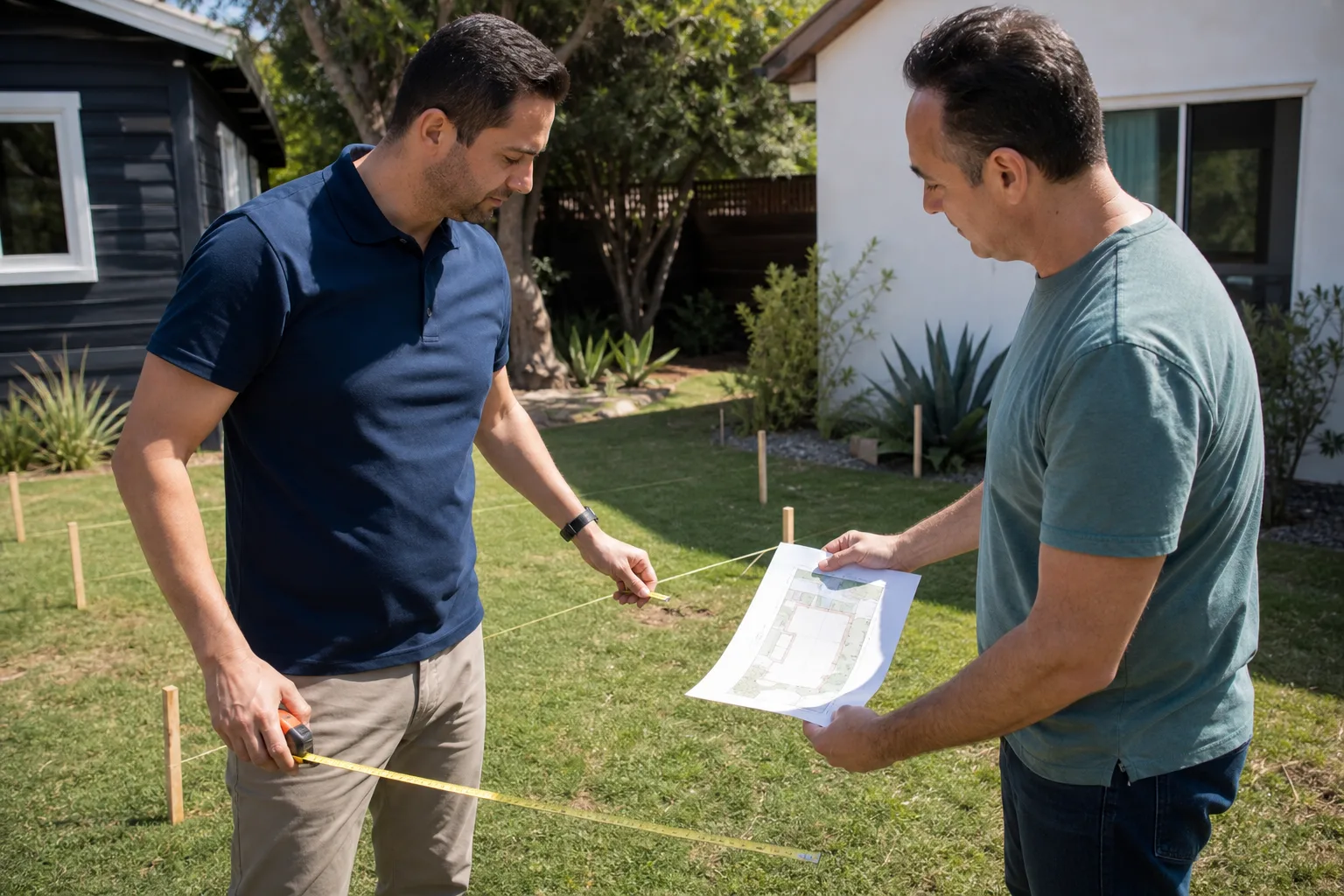
If you’re reading this guide because you’re seriously considering an ADU on your Long Beach property, the time to call a professional is before you’ve committed to a particular product line or design. For more guides & resources, explore our blog. The site assessment comes first: lot dimensions, setback requirements, utility access points, soil conditions, and the specific zoning rules for your neighborhood. A contractor who walks your property before you’ve spent money on plans can tell you what’s actually feasible, what it will cost, and where the pitfalls are hiding. Sutton ADU Long Beach offers free estimates in Long Beach, call (562) 317-7042 and we’ll walk your lot, talk through your options honestly, and give you a written price before any work begins.
Frequently Asked Questions
Most detached ADUs in Long Beach run between $180,000 and $320,000 for a completed one-bedroom unit, with garage conversions typically landing between $120,000 and $200,000. Site conditions, utility coordination, and your choice of prefab versus site-built will move that number significantly. Call (562) 317-7042 for a written price specific to your lot.
A typical site-built detached ADU takes 8 to 14 months from design through final inspection, with LADWP utility coordination adding 6 to 12 weeks on its own. Prefab units can compress the factory portion but still require site work and utility coordination. Anyone promising a four-month complete build is skipping steps you’ll pay for later.
Yes. Every habitable ADU in Long Beach requires a building permit regardless of size. Small units may qualify for streamlined review, but no ADU is exempt from permitting entirely. A contractor who tells you otherwise is putting your property at risk.
Not without substantial upgrades. A standard Tuff Shed is not a habitable structure and doesn’t meet California Building Code for insulation, plumbing, electrical, or egress. Converting one legally usually costs more than building a proper ADU from the start. There are niche cases where a custom-built accessory structure makes sense, but budget for real construction.
Check three documents before your first meeting: a CSLB license certificate showing active status and the correct classification, a certificate of insurance naming you as additional insured, and a photo ID matching the license holder. Then check their Long Beach permit history through the city’s public portal. These four steps catch most of the bad actors in the market.
With a fixed-price contract, the total cost for the defined scope is locked in writing before work begins. Change orders can happen if you alter the scope mid-project, but any change requires your written approval before work proceeds. With a cost-plus contract, the price can drift continuously. Ask for fixed price, in writing, every time. Call (562) 317-7042 to get a written quote for your project.
The Bottom Line
Hiring an ADU contractor in Long Beach is a verification problem more than a trust problem. The CSLB database, the city permit portal, and a few well-timed requests for documentation will tell you more about a contractor than any number of references or review averages. Ask for the three-document stack, check the permit history, insist on a fixed price in writing, and know who is coming to your property before they arrive. That sequence closes the gap between a paper license and a flesh-and-blood human being, which is where most ADU horror stories actually begin. Sutton ADU Long Beach applies this standard to every project we take on, and we’re happy to walk you through the process on your own property.
Written by Miles Hartwell, Owner at Sutton ADU Long Beach, serving Long Beach since 2006.