Tuff Shed Junior ADU Conversion: The Long Beach Owner’s Guide
A Tuff Shed Junior ADU conversion in Long Beach typically runs $85,000 to $145,000 when we handle the full build-out: foundation upgrades, insulation, electrical, plumbing rough-in, drywall, flooring, and the kitchenette and bath that make it legally rentable under California’s junior ADU rules. We stock the conversion-specific hardware and materials for Tuff Shed Premier PRO and Sundance series structures, and most material runs happen within three to five business days. The failure point owners usually call us about isn’t the shed itself: it’s the base connection. A stock Tuff Shed sits on a floating foundation or skids, and long before drywall goes up, water intrusion at the sill plate or a settling corner shows up as a door that suddenly drags or a wall gap that opens at the roofline.
Which Tuff Shed Models This Applies To
We’ve converted the Tuff Shed Premier PRO series (the taller, wider models built on 4×6 pressure-treated skids or optional concrete slab packages), the Sundance TR-700 and TR-1600, and the barn-style Studio series. The compatibility gotcha most homeowners miss is wall height. Long Beach zoning for a junior ADU caps interior ceiling height below 16 feet, but the real question is whether the existing wall framing is 2×4 or 2×6. Many Tuff Shed models use 2×4 walls, which is fine for a shed and under-insulated for a dwelling. The California Energy Code (Title 24) requires ADUs in Long Beach’s climate zone to meet specific insulation values, and 2×4 walls often need rigid foam added to the exterior or we reframe to 2×6. That’s a $6,000 to $12,000 line item depending on the model and linear footage. Identify your series by the stamped metal plate on the door jamb or the model number on the build sheet Tuff Shed gave you at delivery. For OEM versus aftermarket on conversion materials: Tuff Shed doesn’t sell conversion kits, so there’s no OEM path for most of this work. What matters is code-compliant materials: HardieBacker in wet areas, Simpson Strong-Tie connectors at the base and roof, and a vapor barrier spec that matches Long Beach’s marine-influenced humidity.
Signs Your Tuff Shed Junior ADU Conversion Is Failing
- Door drags or won’t latch at the top corner. This almost always traces to foundation settling or sill-plate rot. Tuff Shed skids sit low to the ground, and Long Beach’s clay-heavy soil expands and contracts with rain. The frame torques, and the door jamb is the first thing that shows it.
- Musty smell that doesn’t go away with ventilation. That’s moisture trapped under the floor decking or behind wall panels. Stock Tuff Shed floor decking isn’t sealed against ground vapor, and once Long Beach marine air gets involved, it condenses underneath.
- Visible gap between wall panels at the roofline or corners. The structure has shifted. This is a structural connection issue, not a cosmetic seam. If you can see daylight or feel air moving, the load path isn’t doing its job.
- Electrical outlets that trip or read low voltage. A shed-to-ADU conversion means a new subpanel and separate circuit runs per California Electrical Code. If the original shed had a single 15-amp circuit run from the house, it’s undersized for a dwelling and needs replacement, not repair.
- Drywall cracks forming in a stair-step pattern at corners. This is the frame settling after you’ve already closed the walls. It tells us the structure wasn’t properly tied to its foundation before finish work began.
Replacement Cost & What’s Included
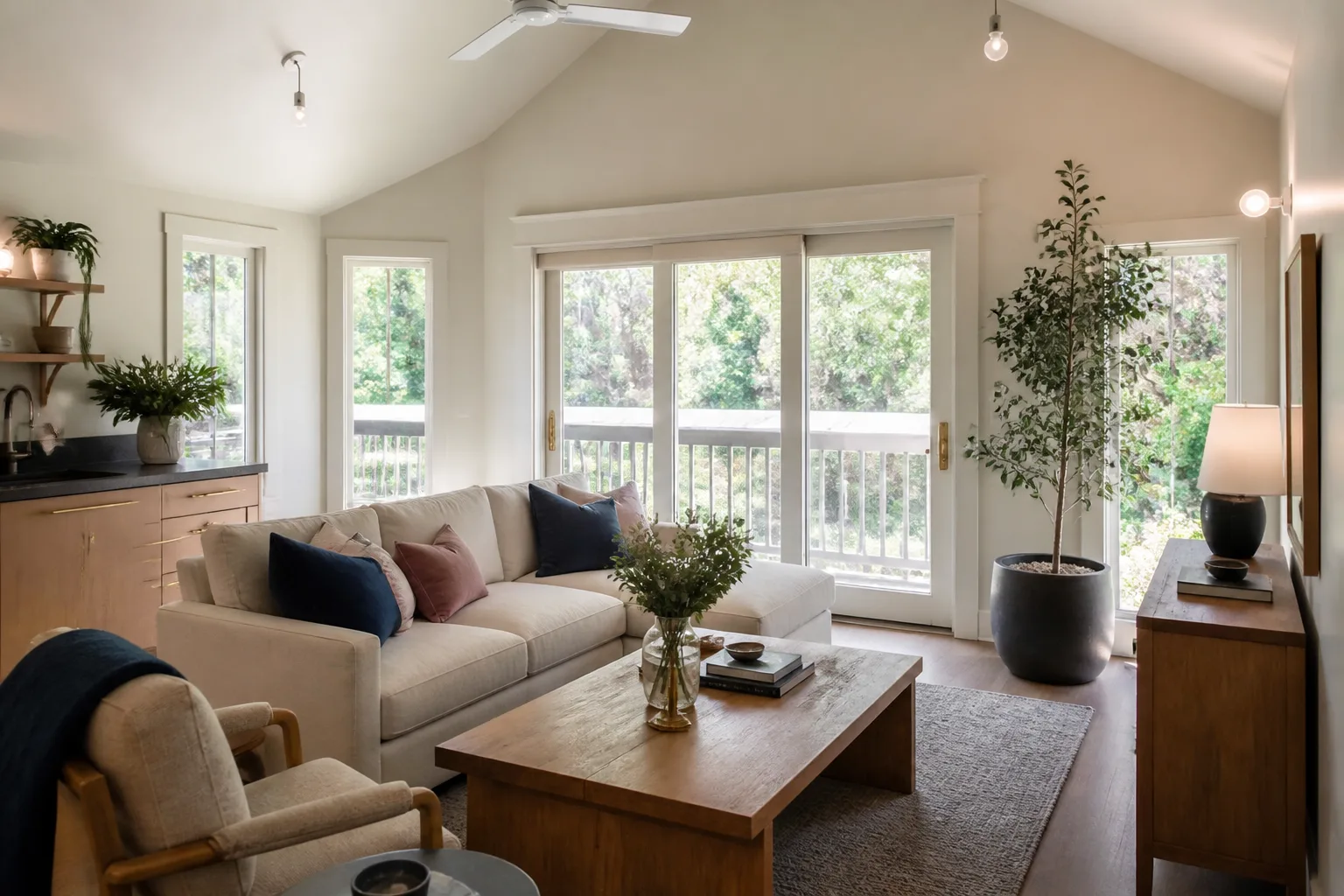
Here’s what we tell Long Beach homeowners when they ask for a real number. A full junior ADU conversion on a Tuff Shed structure, done to code with permits, sits between $85,000 and $145,000. The spread comes from three things: the shed model and condition, the site work involved (a footing upgrade on a slope in Belmont Shore costs more than a flat lot in Bixby Knolls), and the interior finishes you choose. The lower end gets you a 400-square-foot studio with a compact kitchenette, a three-quarter bath, basic finishes, and compliant insulation. The upper end includes site grading, upgraded electrical service if your panel needs it, tile work, better lighting packages, and exterior cladding.
Every quote we give is a written price, line-itemed, before any work starts. You’ll know exactly what each phase costs. And the workmanship warranty is the 365-Day Done Right Promise: if anything isn’t right within a full year of completion, we make it right, no haggling and no second invoice.
DIY or Call Us?
You can safely do some of this yourself: demolition of interior shed panels, pulling up the old floor decking, painting, even running a shop vac through the place and checking for daylight gaps at the base. What you should not do yourself is the electrical, the plumbing, the foundation tie-downs, or anything involving gas lines if you’re adding a stove or tankless water heater. One of those is how fires start, and the other three are how a dwelling fails inspection and costs you double to redo. If you’re tempted to run a subpanel off a YouTube video, please don’t. The city of Long Beach will send an inspector who knows exactly what an under-torqued lug looks like.
We’re at (562) 317-7042. Call and we’ll tell you what your specific shed needs, whether we end up doing the work or not.
FAQs
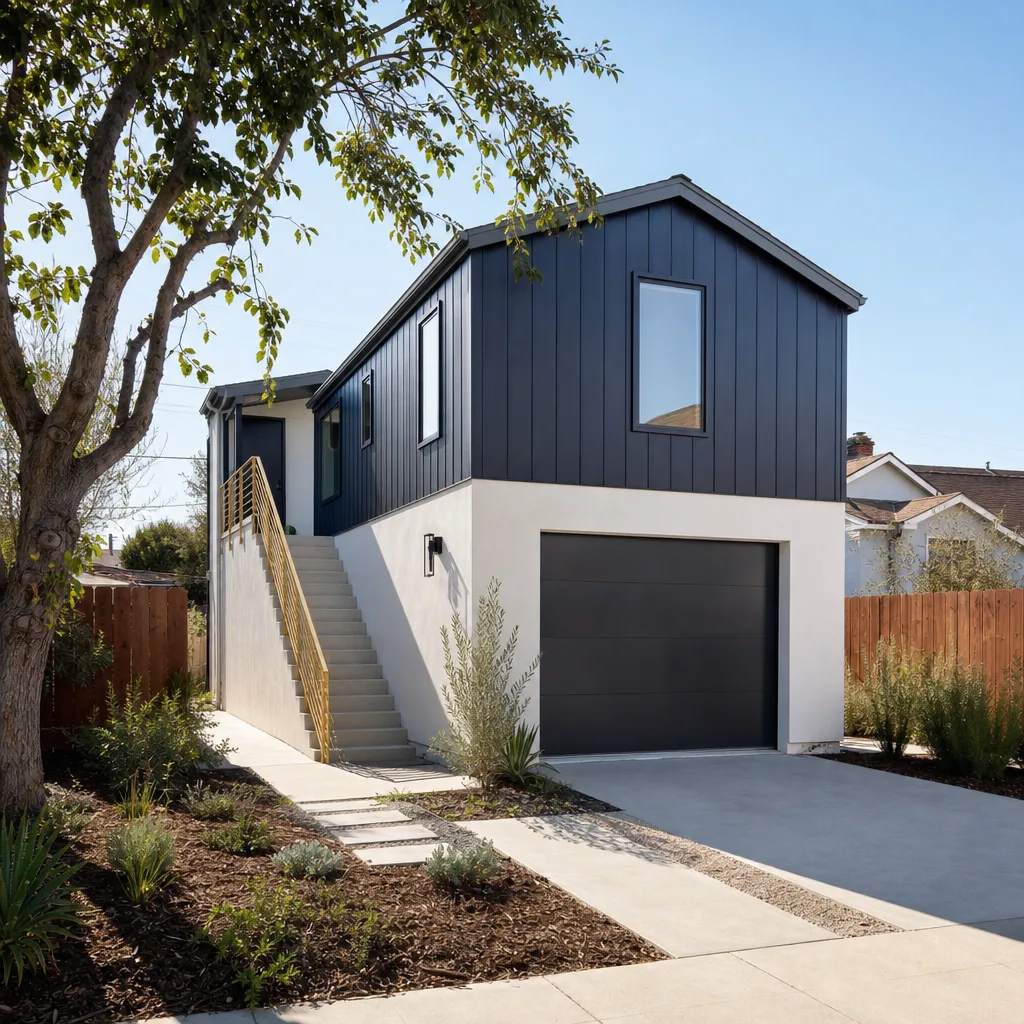
A properly converted Tuff Shed structure with an upgraded foundation, sealed envelope, and full mechanical systems should function as a dwelling for 30 to 50 years, comparable to stick-built construction in California’s climate. The weak point is always the base; if you skipped the foundation upgrade, expect structural problems within three to five years. Call (562) 317-7042 if you’re not sure which foundation your shed has.
Yes, if the failure is caught before structural rot or significant frame warping sets in. We routinely repair sill plates, re-flash rooflines, and correct door framing on Long Beach conversions that were done cheaply the first time. The repair path makes sense if the framing lumber is still sound after we open the wall. If the floor decking is soft or the wall studs show water damage at the base, a partial rebuild is more honest than a patch.
A typical Tuff Shed junior ADU conversion in Long Beach takes 10 to 14 weeks from permit approval to final inspection. The longest poles in the tent are usually the city permit review window and the Title 24 energy compliance testing near the end. We pull permits for you, and we’ll tell you at the start which phase of Long Beach’s plan review is most likely to hold things up.
We keep the common conversion materials on hand: Simpson tie-downs and anchors, vapor barrier rolls, sill gasket, 2×6 framing lumber, HardieBacker, and standard electrical rough-in components. Specialty items, like tankless water heaters or specific window sizes to match a Tuff Shed Premier PRO opening, are ordered per project and typically arrive within a week. Call (562) 317-7042 and tell us your model number; we’ll check what’s on the truck.
Get a Straight Answer on Your Long Beach Tuff Shed
If you’ve got a Tuff Shed that’s half-converted, or you’re staring at one in the backyard and wondering if it’s viable under Long Beach’s junior ADU ordinance, call (562) 317-7042. We’ll walk you through what we’d need to inspect, what the likely permit path looks like, and a realistic cost range for your specific model and lot. Never a vague estimate, never a surprise invoice. That’s the Threshold Standard, and it applies from the first phone call to the final walkthrough.
Written by Miles Hartwell, Owner, Sutton ADU Long Beach at Sutton ADU Long Beach, serving Long Beach and nearby areas.