James Hardie Site Prep & Utilities: The Long Beach Owner’s Guide
Site prep and utility work for a James Hardie project in Long Beach typically runs $4,200 – $11,800 depending on trenching depth, soil conditions, and how far your ADU or addition sits from the existing utility lines. We stock the common fittings, sleeves, and junction materials on our trucks, so most site prep and utility rough-in work starts within a week of your written estimate. Homeowners usually discover this phase is failing when a building inspector flags trench depth, a soggy patch appears over a water line, or the electrical panel can’t handle the new load without an underground feeder upgrade.
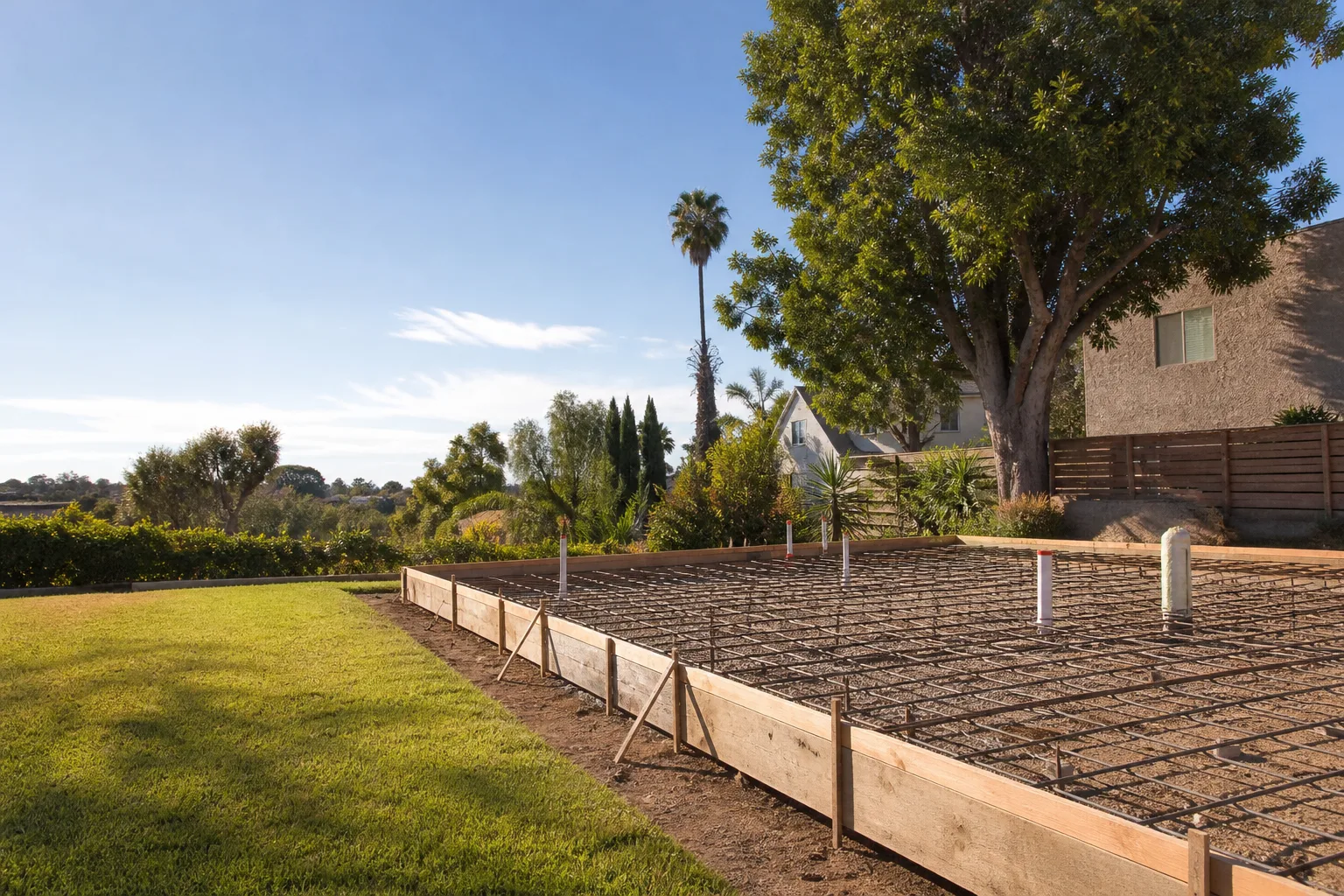
If you’re reading this, you probably already know the part of the story that doesn’t show up in the brochure. The gorgeous James Hardie siding gets all the attention. But under that siding is a foundation, and under that foundation is where the real work lives: trenching, conduits, water lines, sewer connections, and drainage. Get any of it slightly wrong in Long Beach’s clay-heavy soil and you’ll be chasing problems for years.
Which James Hardie Models This Applies To
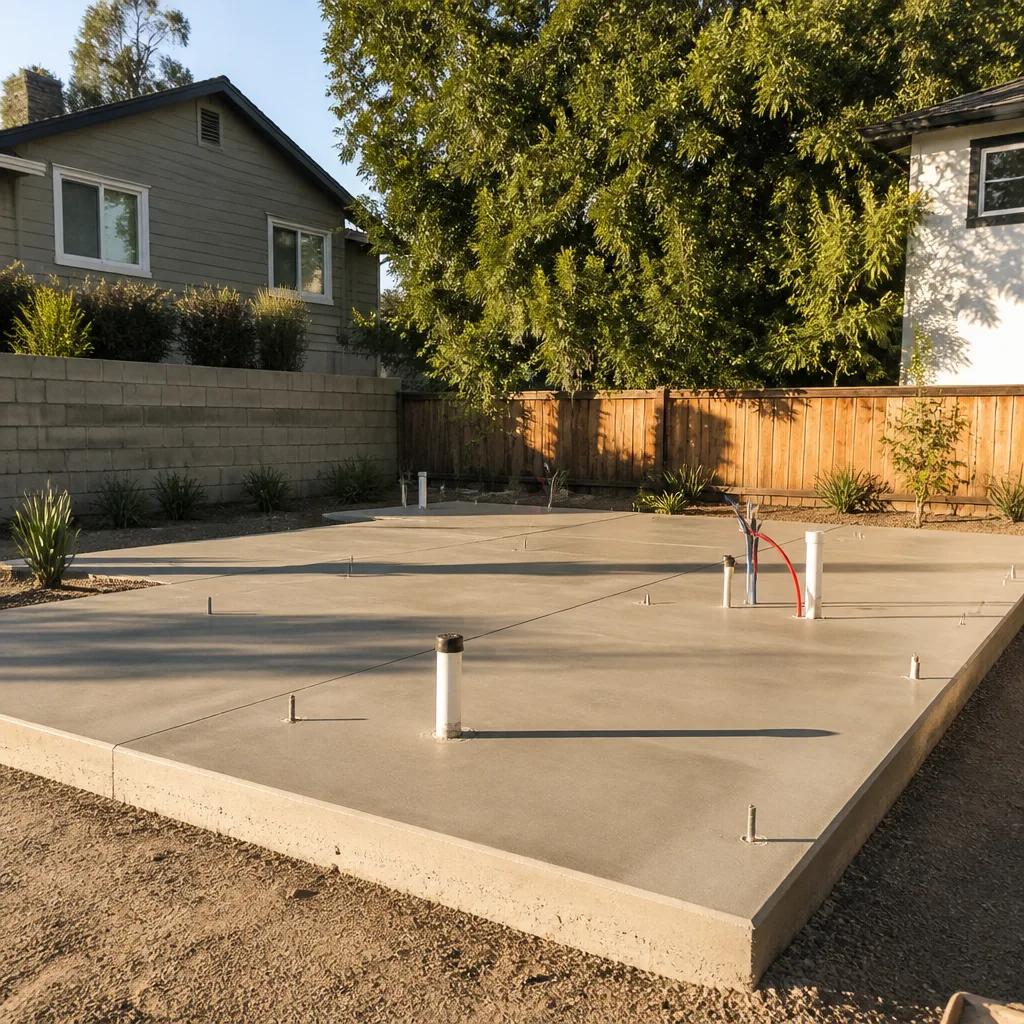
Site prep and utilities aren’t tied to one specific James Hardie product line the way a flashing detail is. Whether you’re wrapping a detached ADU in HardiePlank lap siding, finishing a garage conversion with HardiePanel vertical siding, or using HardieTrim boards around the eaves, the site underneath needs the same four things done right: water where it should go, water routed away from where it shouldn’t, power that meets code, and ground that won’t shift under the slab.
The James Hardie-specific part of this equation is sequencing. HardiePlank and HardiePanel installs require the rough utilities to be in and inspected before the exterior envelope goes up. You can’t trench under a finished wall. If your project uses HardieBacker board in a bathroom or utility area, that’s a different phase entirely, but the plumbing rough-in behind it has to be tested and signed off first. One compatibility gotcha we see in Long Beach regularly: homeowners who buy a prefab or panelized unit and assume the factory handles site utilities. They don’t. Site prep is always on the homeowner, and it’s where the real money and the real delays live.
When we scope a James Hardie project, we’re not just ordering parts off a generic list. We’re matching pipe diameter to your water pressure, conduit size to your panel upgrade, and trench depth to Long Beach’s specific frost line and soil movement patterns. If you’re working with an Abodu, Cover, or Dvele unit, the utility stub-out locations are set in the factory, which means our site prep has to hit those positions within an inch. That’s the kind of precision that separates a clean inspection from a failed one.
Signs Your James Hardie Site Prep & Utilities Is Failing
- Persistent damp spot in the yard, even in dry weather. This usually means a supply line is weeping at a joint, or a drainage pipe wasn’t bedded properly and has shifted. In Long Beach’s expanding clay soil, a poorly bedded line will move every wet season.
- Foul odor near the foundation or in a corner of the yard. A cracked or separated sewer lateral lets gas escape. If you smell it, the line is already compromised, and a camera inspection will show exactly where.
- Low water pressure inside the structure while outside spigots run fine. That’s a classic undersized line or a kinked service line. It’s not a faucet problem; it’s a supply problem under the ground.
- Breakers tripping when you run a saw or a window AC unit. The temporary panel wasn’t sized for the actual load of a full construction crew plus the eventual ADU. Undersized temporary power adds delays and inspection failures.
- Water pooling against the slab after rain. Grade wasn’t sloped away, or a French drain was spec’d but never installed with the right fall. In Long Beach, even a moderate winter storm will show you exactly where water wants to sit.
Replacement Cost & What’s Included
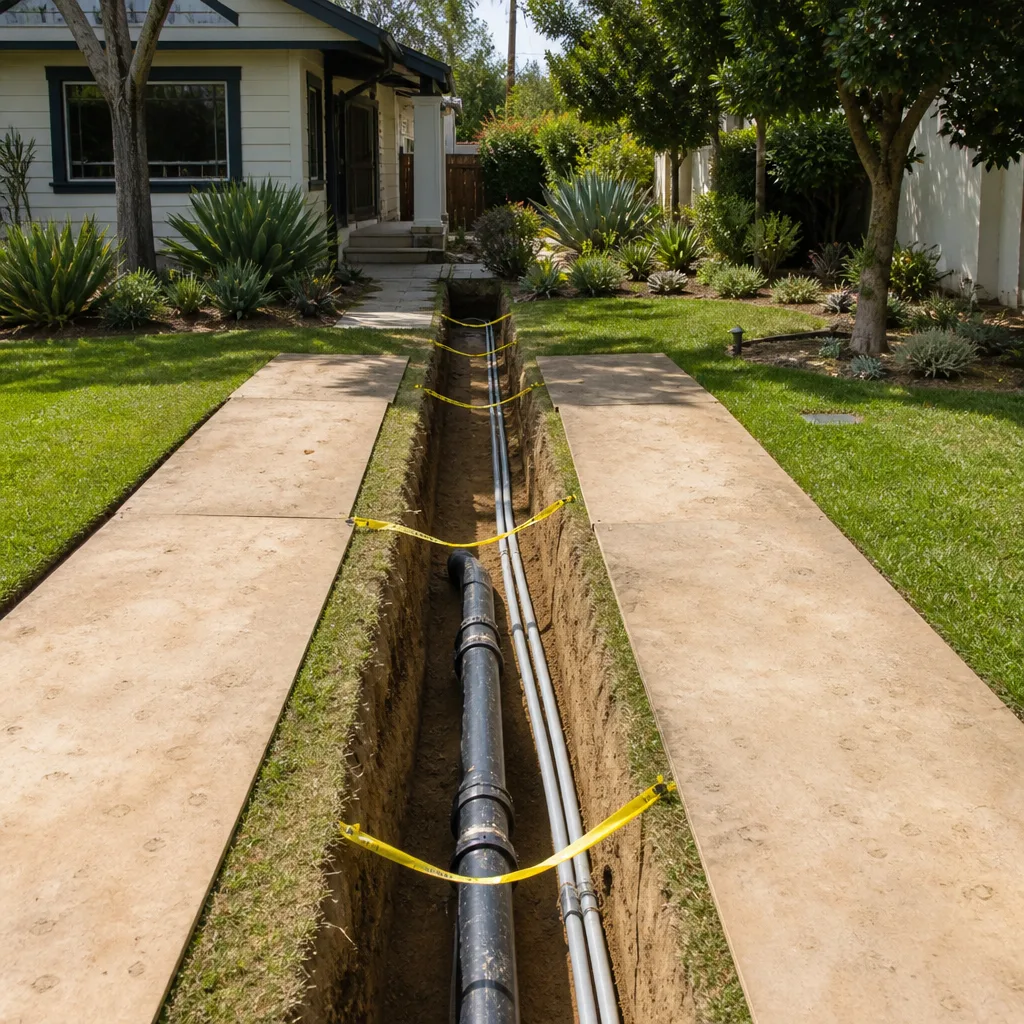
Here’s what we tell Long Beach homeowners before they commit to anything: the price depends on what’s under your yard and what the inspector wants to see. A straightforward trench for a water line and electrical conduit on a flat lot might run $4,200 – $6,500. If you’re dealing with a deep sewer connection, a panel upgrade, or soil that needs over-excavation and compaction, expect $7,800 – $11,800.
What drives the range most is depth and distance. Sewer lines in Long Beach often sit 36 to 60 inches down, and every foot of trench costs real money. Electrical feeders need 18 to 24 inches of cover with conduit. Water lines need 12 to 18. If your yard has roots, old concrete, or undocumented lines from a previous owner, the scope grows. We quote all of this in writing before a single tool comes off the truck, and the 365-Day Done Right Promise covers our workmanship for a full calendar year after completion. If a line we installed shifts or leaks, we come back and make it right. No haggling.
DIY or Call Us?
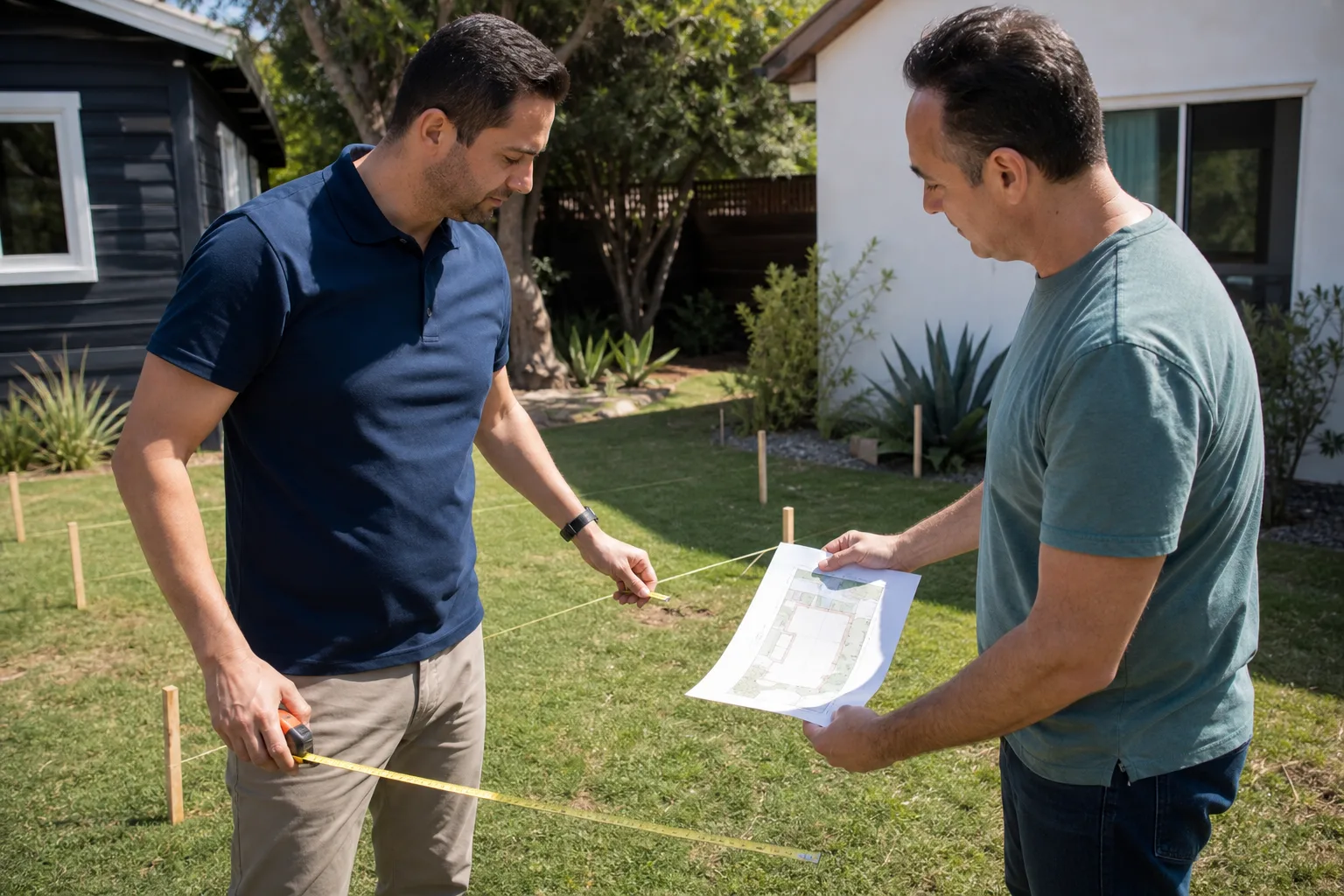
Some parts of site prep are genuinely safe for a homeowner to check. You can locate your water shutoff, map where your existing lines run using 811’s free marking service, and photograph the trench before it gets backfilled. But trenching for utilities is not a weekend project, and it’s not just about the digging. A collapsed trench is a burial risk. A nicked gas line or buried electrical line is a serious injury risk. If you don’t know exactly what’s under your feet, stop and call someone who does.
Where DIY goes wrong on Long Beach clay is usually the bedding and backfill. It looks right on the surface, but it settles unevenly, and within two years the line is stressed at a joint. Then you’re paying twice: once for the original work, once to dig it all up again. That’s the kind of thing we’d rather prevent than repair. Call us at (562) 317-7042 before you put a shovel in the ground.
FAQs
A properly installed water line, sewer lateral, and electrical conduit should last 50 years or more. The weak points are connections and transitions, not the pipe itself. In Long Beach, the real lifespan threat is soil movement, which is why we bed lines in sand and compact in lifts rather than dumping loose fill back into the trench.
In some cases, yes. A cracked sewer lateral with one clean break can often be sectioned and repaired. A supply line with a single pinhole leak might be a spot repair. But if the line is undersized, grading incorrectly, or failing in multiple places, replacement is cheaper than chasing repairs. Call (562) 317-7042 for an exact scope, and we’ll tell you honestly which side of that line you’re on.
Most Long Beach projects run five to ten working days from first dig to final inspection, depending on the number of utilities, depth, and whether a panel upgrade is involved. We schedule inspections as the work progresses so you’re never waiting weeks with an open trench.
We keep common fittings, conduit, junction boxes, and sleeving on our trucks, so we’re not stopping work for a run to the supply house. Specialty items like a specific meter base or a pre-fabricated sewer manhole are ordered ahead once your written estimate is approved.
Written by Miles Hartwell, Owner, Sutton ADU Long Beach at Sutton ADU Long Beach, serving Long Beach and nearby areas.