Cover Site Prep & Utilities: The Long Beach Owner’s Guide
Site prep and utility work for a Cover unit in Long Beach typically runs $15,000 – $45,000 depending on what your lot needs, and the utility portion alone (water, sewer, electrical, gas) usually lands between $8,000 and $22,000. We stock the common Cover-compatible connection hardware and trenching materials on our trucks, so once permits clear, we can usually mobilize within a week. Most owners discover there’s a problem when the Cover delivery team does their pre-site inspection and flags something: a sewer lateral too shallow, a panel that won’t carry the load, or a gas line that needs relocating before the unit can be set.
The frustrating part we hear again and again from owners throughout Long Beach is that this discovery often happens weeks into the process, after the Cover unit is already scheduled for delivery. A failed or missing utility stub-out stops everything. Miles Hartwell has walked enough Belmont Shore lots with 40-year-old clay sewer lines to know exactly where the surprises hide, and we’d rather tell you about them before the crane shows up.
Which Cover Models This Applies To
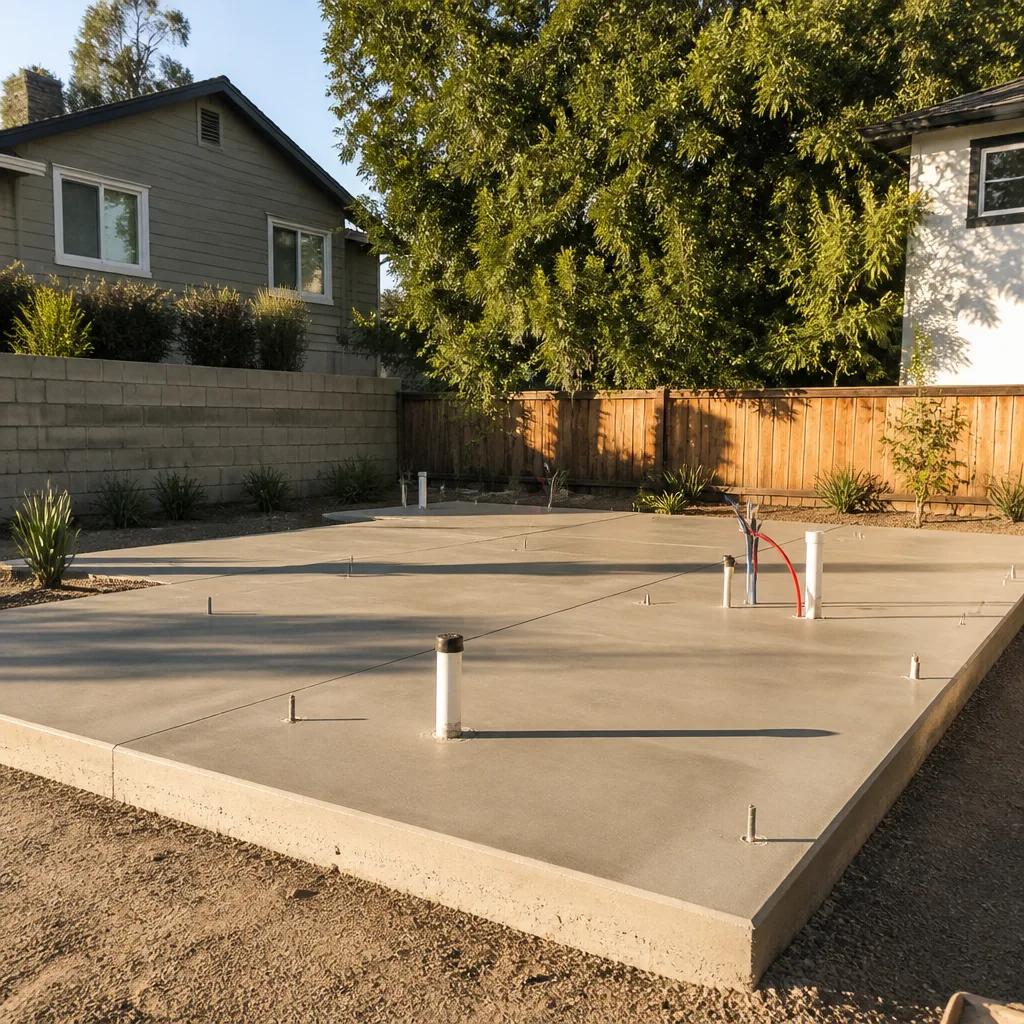
This guidance covers the full Cover product line: the Cover Studio, Cover One, and Cover Two, plus garage conversions where the existing structure becomes part of the ADU envelope. The site prep requirements don’t change much between models, but the electrical service load and sewer connection sizing do shift with unit size, and that’s where compatibility matters.
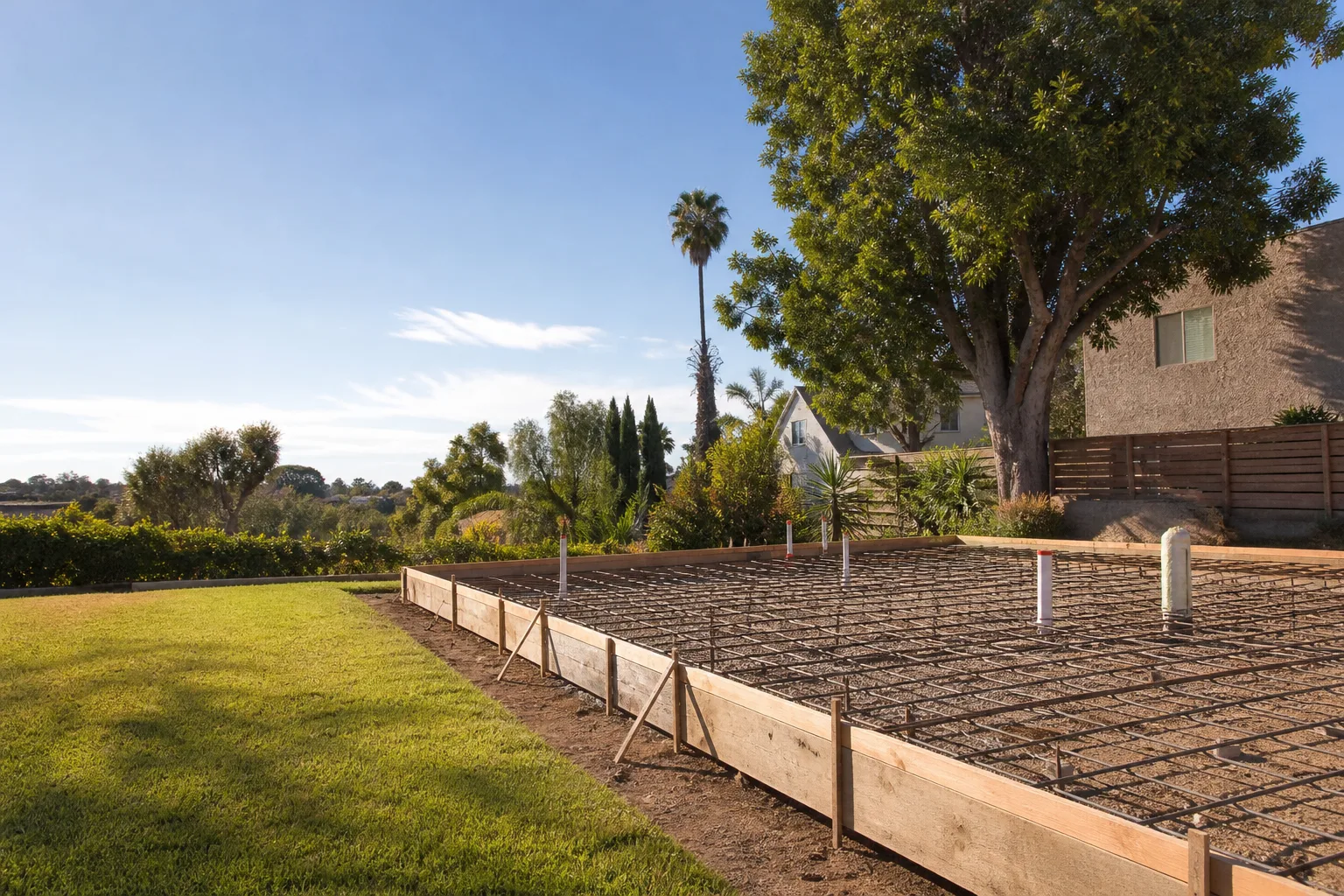
The critical Cover-specific detail: Cover units arrive as a complete chassis with utility stubs pre-positioned at fixed points on the unit. Your underground rough-in has to land within roughly 6 inches of those stub locations, or you’re cutting concrete and re-trenching on set day. That tolerance is tighter than most stick-built additions require, and it’s the number one reason we recommend having a utility contractor measure against the Cover shop drawings, not against a guess. If you have your Cover serial number or delivery manifest, we can verify exact stub dimensions before we dig.
On the OEM versus aftermarket question: for underground pipe, conduit, and panel hardware, quality aftermarket materials are genuinely equivalent to anything Cover would specify, and we source from suppliers we’ve used on dozens of ADU projects in Long Beach. Where we won’t substitute is anything that interfaces directly with the Cover chassis connection points. Those adapters and flex connectors should match factory spec, because a mismatch there becomes a warranty dispute with the manufacturer, and nobody wants that.
We also work with Abodu and Dvele units, so if you’re still deciding between prefab brands, we can give you an honest comparison of what each one requires from a site prep standpoint before you commit.
Key Takeaways
- Utility stub-out locations must match Cover shop drawings within roughly 6 inches
- Most Long Beach lots need sewer, water, electrical, and gas work before set day
- Older neighborhoods like Belmont Shore and Alamitos Heights frequently have clay sewer laterals that need replacement under current code
- Written price before trenching starts, every time
- We stock common Cover-compatible connection hardware on our trucks
Signs Your Cover Site Prep & Utilities Is Failing
Site prep and utility failures show up in a few predictable ways, and most of them are tied to Long Beach’s soil chemistry and older infrastructure. Here’s what we see in the field:
- Slow drains or gurgling toilets after the unit is set. The sewer lateral was borderline before the ADU was connected, and now it’s carrying more than it was ever sized for. In neighborhoods with cast iron or clay pipe from the 1950s and 60s, cracks and root intrusion are common, and adding a second dwelling pushes a marginal line over the edge.
- Breaker trips when the Cover unit’s kitchen and HVAC run at the same time. The existing main panel didn’t have the capacity that the site prep plan assumed. Cover units pull real amperage, and a 100-amp panel that was fine for a 1950s bungalow won’t carry an ADU with a full electric kitchen and heat pump. This usually means a panel upgrade or a subpanel run, and it should be caught before delivery, not after.
- Water pressure that drops noticeably when both structures are using water. The supply line from the meter is undersized, or the pressure regulator at the house is set for one dwelling’s demand. Long Beach Water Department requirements for multi-dwelling lots often mean a larger meter and a dedicated shutoff for the ADU.
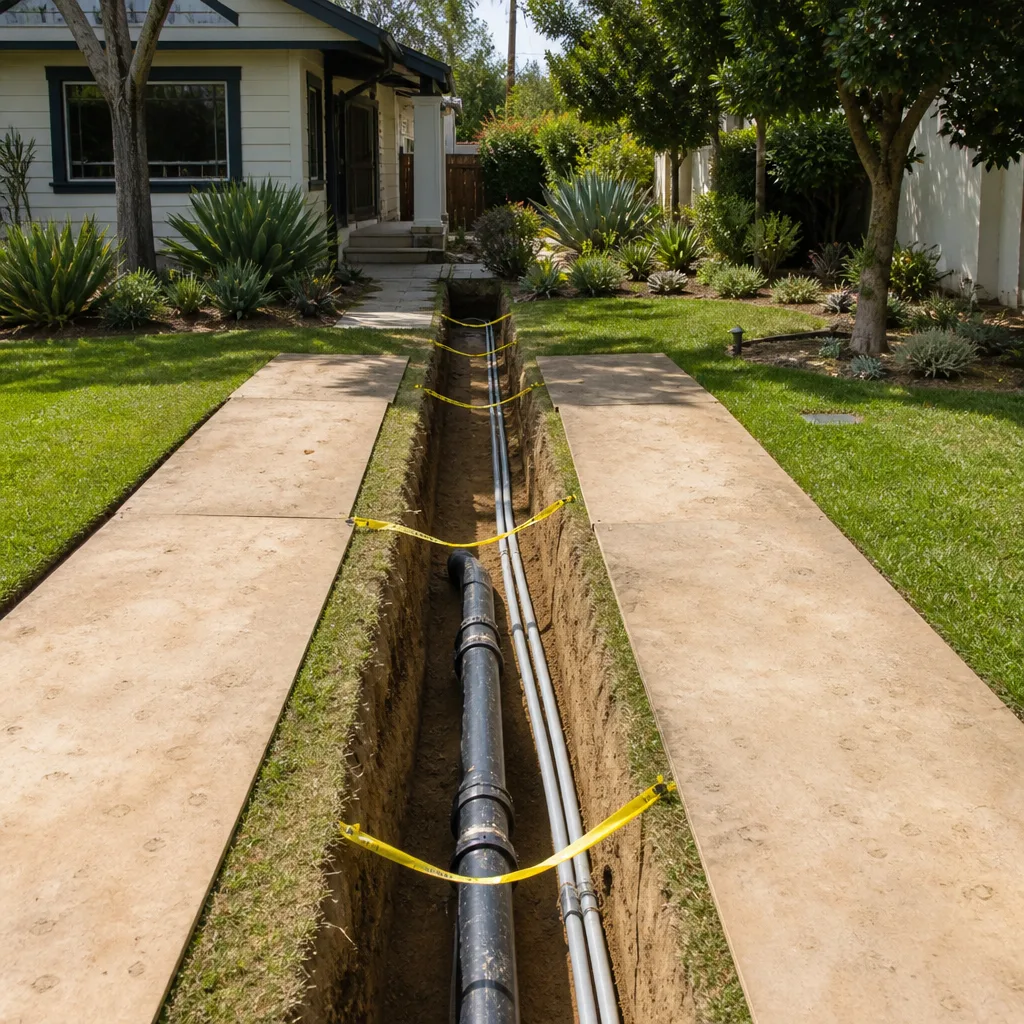
- Visible settling or erosion around the trench lines. Long Beach’s sandy and clay-mixed soils compact differently, and a trench that wasn’t backfilled and compacted properly will settle over the first rain season. You’ll see a sunken stripe across your yard or driveway, and it gets worse before it gets better.
- Gas line routing problems discovered during inspection. A gas line that was fine for a single-family home may run right through the required setback for the new ADU, which means relocating it before the unit can be legally set. This is a classic Belmont Shore problem, where lots are tight and old gas services were laid without much thought to future construction.
Replacement Cost & What’s Included
Here’s what Long Beach homeowners should expect to pay for Cover-specific site prep and utility work, based on what we’ve bid and built across the city:
| Scope of Work | Typical Range (Long Beach) |
|---|---|
| Sewer lateral repair or replacement (trenching, materials, connection, backfill) | $4,500 – $12,000 |
| Water service upgrade (new meter connection, line to ADU, dedicated shutoff) | $3,000 – $7,500 |
| Electrical panel upgrade and subpanel run to ADU site | $5,000 – $14,000 |
| Gas line relocation or extension | $2,500 – $8,000 |
| Site grading, excavation, and base prep for Cover foundation system | $6,000 – $18,000 |
| Permit coordination and inspection fees | $2,000 – $6,000 |
The spread comes down to what’s under your lot. A newer home in a tract neighborhood with PVC sewer and a 200-amp panel needs far less than a 1940s Belmont Shore bungalow with a clay lateral and a 60-amp fuse box. We give you a written line-item price before any work starts, so you know exactly what each piece costs, and that price doesn’t change unless we hit something genuinely unknowable, in which case we stop, show you the issue in person, and give you a written change order to approve before moving forward. Every site prep job includes a full year of coverage under our 365-Day Done Right Promise. If something we installed fails within a year, we fix it on our dime.
DIY or Call Us?
Site prep for a Cover unit is not a DIY job. We’re not being precious about it, and we’re not trying to scare you into a contract. The reality is that trenching for sewer, water, gas, and electrical involves depth requirements, compaction standards, and inspection checkpoints that can’t be eyeballed. A sewer line at the wrong slope backs up. A gas line nicked by a shovel becomes a genuine safety risk. An electrical conduit buried at the wrong depth fails inspection. This is underground work that gets covered up and forgotten until it fails, which is precisely why the city wants an inspector looking at it before the trench is closed.
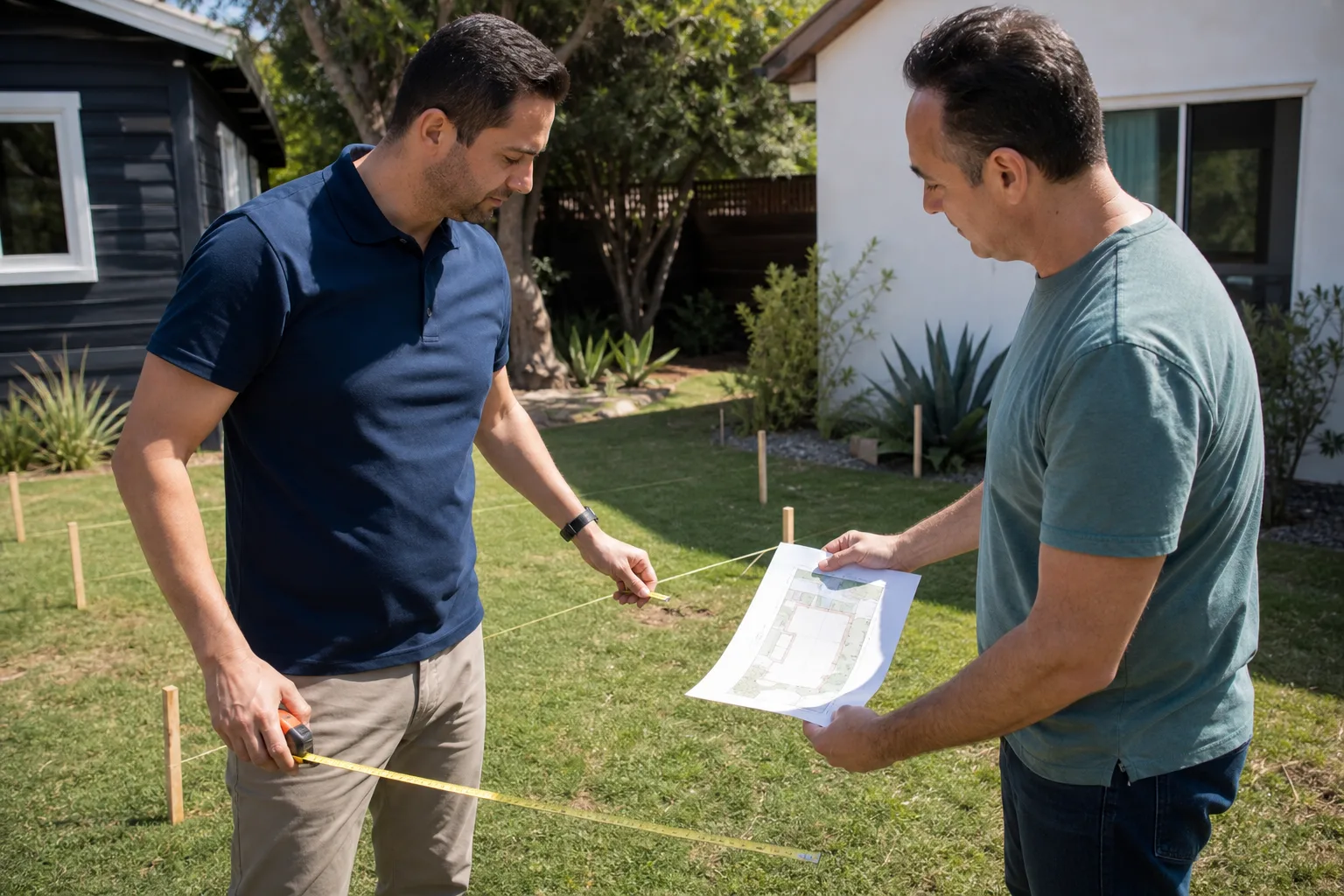
What you can do yourself, and what we actively encourage: walk your lot with a tape measure and compare where your existing utility lines sit against the Cover setback requirements, check your main panel’s amperage rating, and call the city to pull your property’s utility records. Knowing what you have before you pick up the pen is the best free prep there is. Then call us at (562) 317-7042, and we’ll give you a written price for the rest.
FAQs
Properly installed underground utilities in Long Beach’s soil typically last 50 to 75 years for PVC and HDPE, and 75-plus years for copper water lines, though older clay sewer laterals in neighborhoods like Belmont Shore are often already at end of life by the time an ADU gets added. The factor in our coastal climate isn’t the weather as much as soil chemistry, tree root pressure, and seismic settling, which is why compaction during trench backfill matters more here than a homeowner might expect. Call (562) 317-7042 for an assessment of what’s under your specific lot, and we’ll give you honest numbers.
Yes, often. A damaged section of sewer lateral can be spot-repaired with a slip-liner without a full trench, and an electrical panel that’s slightly undersized can sometimes be corrected with a subpanel instead of a full service upgrade. The call comes down to what failed, where, and whether the repair meets current code for a multi-dwelling lot in Long Beach. Our preference is always the least invasive fix that will actually hold, but we won’t patch something that will fail inspection in six months. Schedule a visit at (562) 317-7042 and we’ll tell you what your options are.
Most site prep and utility installations for a Cover unit take 2 to 4 weeks from first trench to final inspection, with the spread driven by whether we’re doing a full sewer replacement, a panel upgrade, or just stubbing utilities to a prepared site. Permit approval time is separate and depends on the city’s current workload, though Long Beach has been running reasonably predictably for ADU permits. We’ll give you a written timeline alongside your written price so you know what you’re agreeing to before you pick up the pen.
We stock the common connection hardware we use on Cover jobs: PVC and HDPE sewer materials, copper and PEX water line fittings, conduit, panel hardware, and the flex connectors that interface with Cover’s chassis stubs. If your project needs something unusual, we source it from local supply houses in Long Beach, which usually adds a day or two, not weeks. When you call (562) 317-7042 with your Cover model and the issue you’re seeing, we can usually confirm parts availability during that first conversation.
Written by Miles Hartwell, Owner, Sutton ADU Long Beach at Sutton ADU Long Beach, serving Long Beach and nearby areas.