Boxabl Site Prep & Utilities: The Long Beach Owner’s Guide
Site prep and utility installation for a Boxabl home in Long Beach typically runs $45,000 to $110,000 depending on lot conditions, and most property owners discover this cost only after their foundation quote comes back missing half the work. The short version: your Boxabl needs a level pad or stem-wall foundation, trenching for water, sewer, and electrical, and a connection point for each utility that meets City of Long Beach code before the unit ever arrives. We handle the full package, and we’ll show you the written price before anyone breaks ground.
Most Long Beach owners first realize site prep is a separate scope when their Boxabl delivery gets scheduled and they learn the unit can’t be placed on bare ground. The second realization usually comes when they find out the factory doesn’t pull permits or dig the trench from the street to the unit. That’s exactly where we come in. We’ve done enough Boxabl site work in neighborhoods like Belmont Shore, Bixby Knolls, and Naples to know where the surprises hide, and we’d rather tell you about them now than bill you for them later.
Which Boxabl Models This Applies To
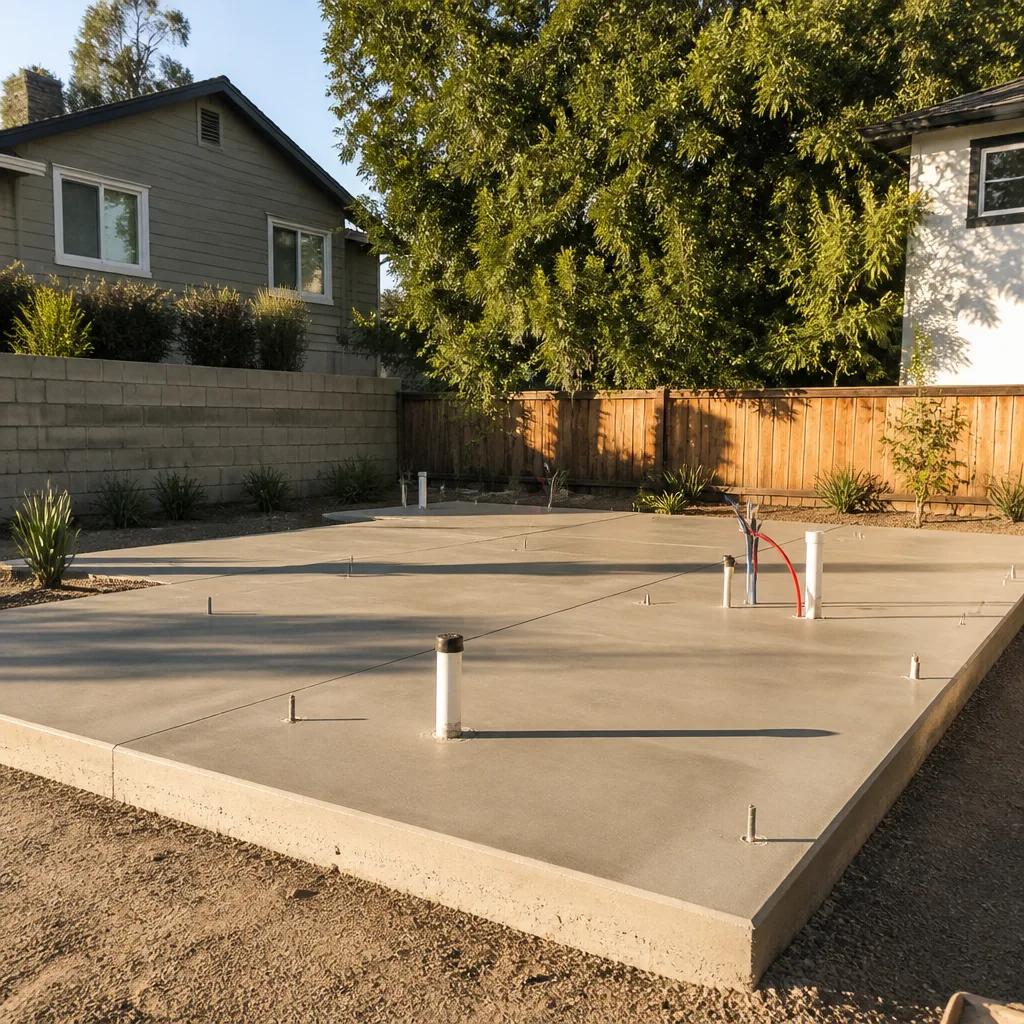
Every Boxabl product, from the Casita (the 20×20-foot, 400-square-foot unit most people recognize) to the larger multi-module configurations, needs the same fundamental site package: a prepared pad, utility stubs, and a foundation system rated for the unit’s 16,000-pound base weight. The foundation spec changes based on your soil type and whether you’re in a flood zone, which matters in parts of Long Beach near the Los Angeles River and the coast.
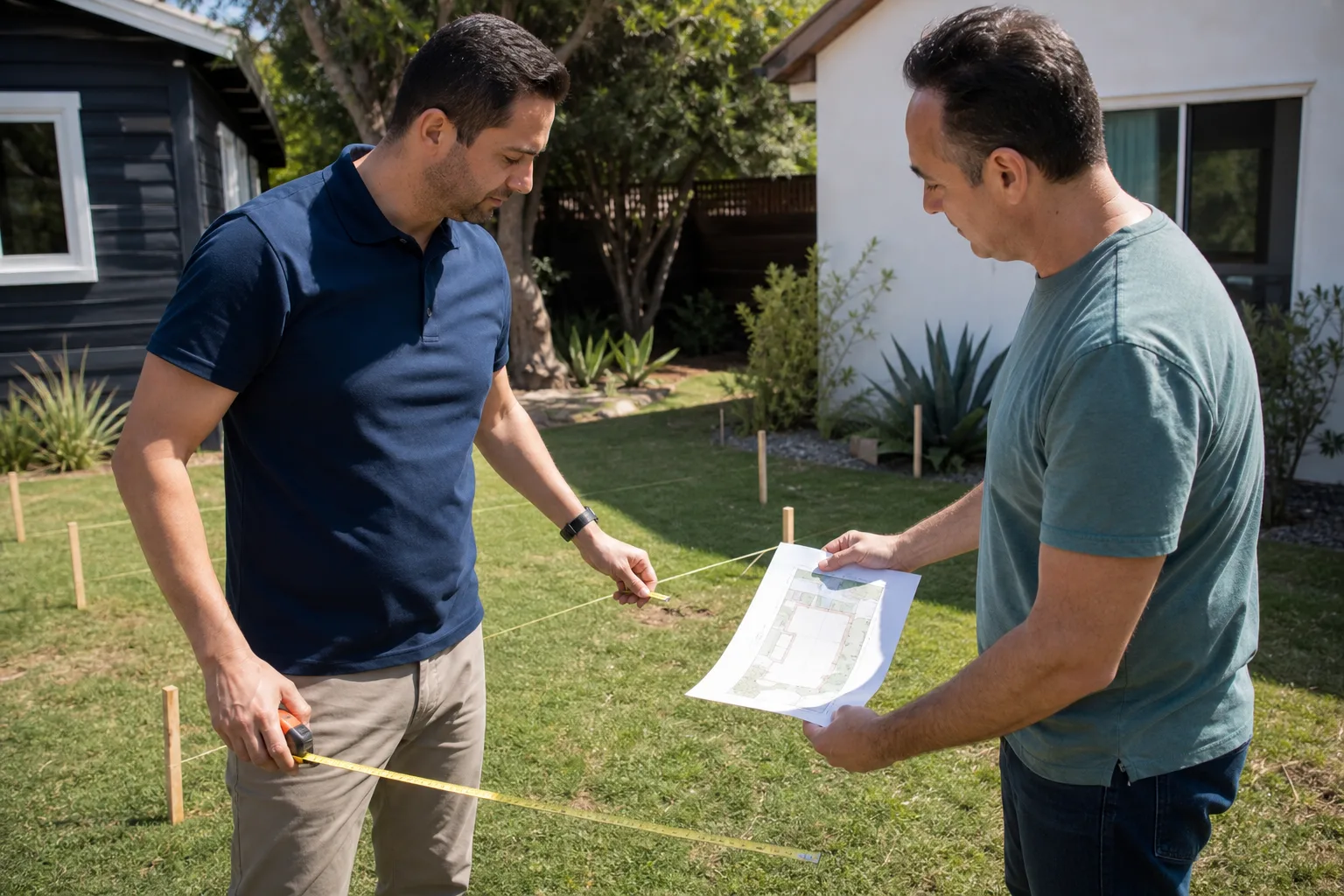
One compatibility gotcha that trips up Boxabl owners: the Casita’s utility connections are located on the exterior short wall, and the factory’s default stub-out spacing assumes a specific orientation. If your lot forces a different unit rotation, the stubs need to be repositioned before the pad is poured. We measure the actual placement against the factory drawings before any concrete shows up, because moving a sewer line after the slab cures costs three times what it costs to get it right the first time.
On the OEM-versus-aftermarket question: Boxabl doesn’t manufacture site prep materials. The parts that matter here, the water line fittings, electrical conduit, sewer connections, and anchor bolts, are standard trade materials from manufacturers like JM Eagle, Cerrowire, and Simpson Strong-Tie. What matters is that the materials are specced correctly for Long Beach’s coastal corrosion profile and that the connections match Boxabl’s exact inlet locations. We’ve seen aftermarket shortcuts fail inspection, and those reinspection fees and delays fall on the homeowner.
Signs Your Boxabl Site Prep & Utilities Is Failing
If your Boxabl is already on site and something’s gone wrong, here’s what you’ll notice:
- Water pressure drops or fluctuates when multiple fixtures run. This often points to an undersized water line from the street, or a kinked service connection at the transition point where the trench line meets the unit’s inlet. Long Beach Water Department requires a 1-inch minimum service line for most ADU installations, and anything smaller will show up as pressure loss.
- Sewer smells or slow drains right after the unit is connected. This is usually a grading problem in the trench line, meaning the pipe was laid without proper slope. A sewer line needs a consistent 2% drop from unit to street. If the trench settles, or if it was cut with high and low spots, waste sits in the line and gases back up.
- Water pools along one side of the Cassita after a rain. This says the pad grading or perimeter drainage wasn’t done correctly. Long Beach’s winter rains, while not heavy by national standards, are enough to push water against a Boxabl’s base trim and wick into the wall assembly. Standing water against a prefab unit shortens the exterior envelope’s life.
- Electrical panels trip intermittently, especially on hot afternoons. Coastal humidity and salt air in Long Beach corrode connections faster than inland. If the conduit fittings or ground rod connections weren’t sealed for a marine environment, you’ll get nuisance trips and, eventually, arcing. This is a safety issue, not an inconvenience.
- The unit sits slightly out of level, or you notice a soft spot near one corner of the pad. This means the subgrade wasn’t compacted properly before the pour, or the slab was undersized for the soil bearing capacity. Boxabl units are rigid-frame structures, so the frame itself may stay fine, but the pad movement will transfer stress to the corner anchor points over time.
Replacement Cost & What’s Included
For a standard Casita site package in Long Beach, here’s the price reality we hand customers on a written line-item estimate before any work starts:
- Full site package (pad, trenching, utility stubs, anchor system): $45,000 – $75,000 depending on soil, access, and utility run distance
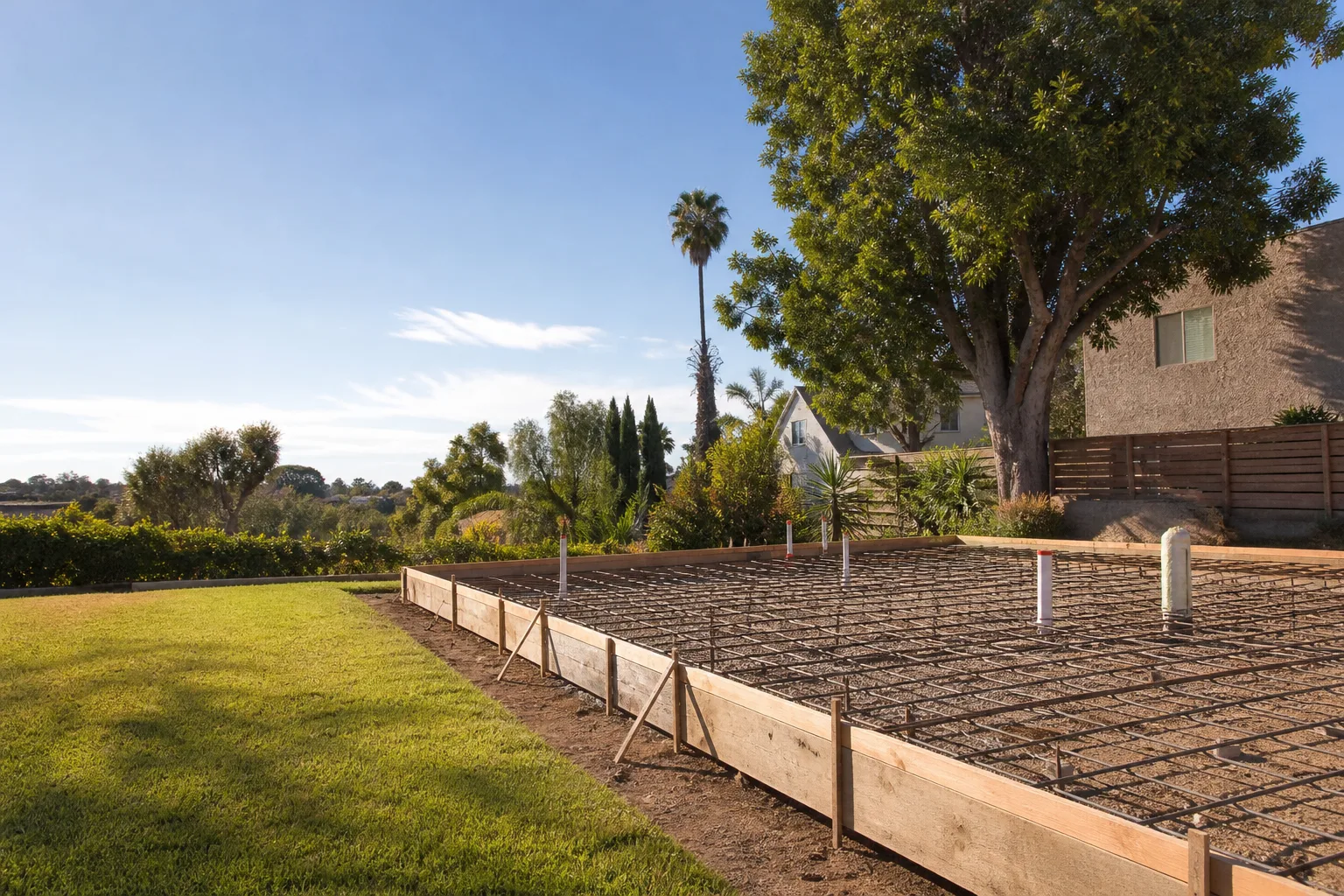
- Foundation only (prepared compacted pad with stem-wall or slab, no utility work): $18,000 – $28,000 depending on soil bearing capacity and rebar schedule
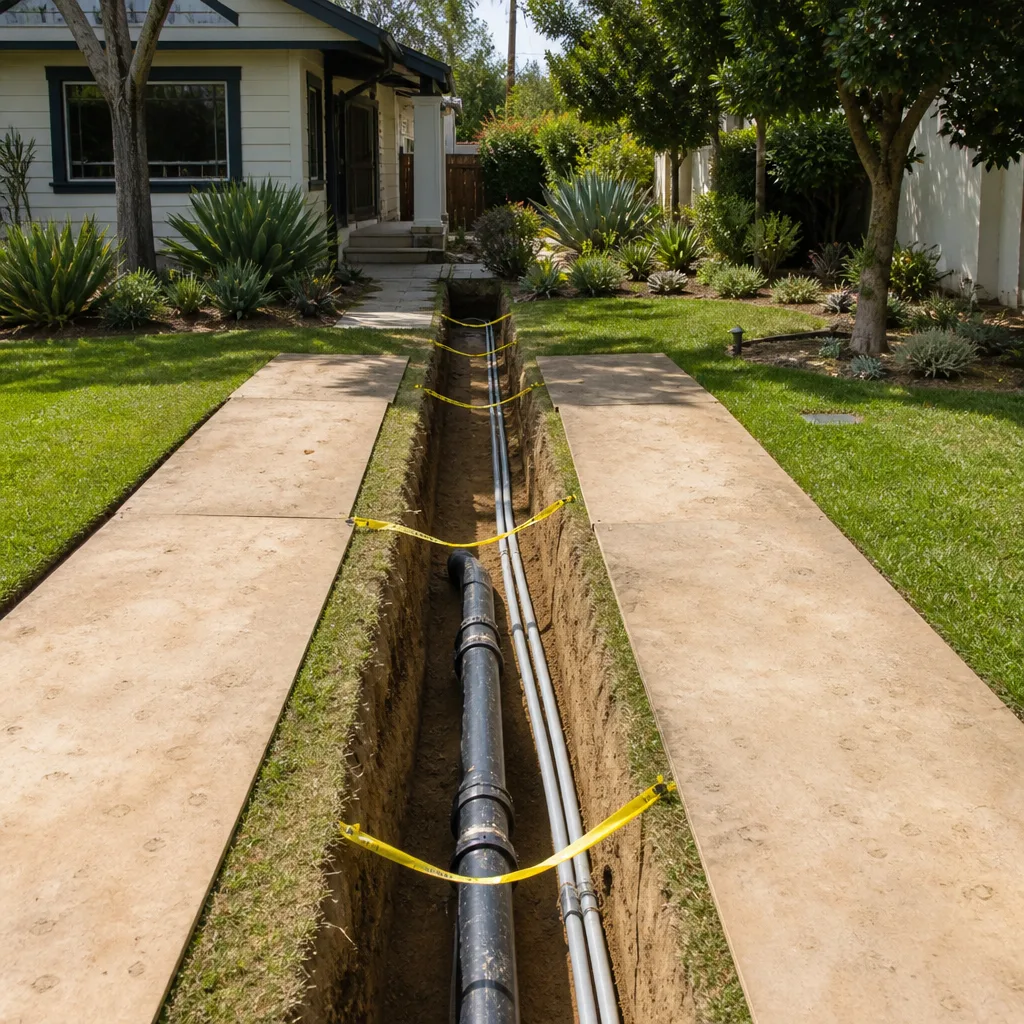
- Utility trenching and connections (water, sewer, electrical, with City inspection): $14,000 – $22,000 depending on distance from street and whether the sidewalk or driveway gets cut
- Utility repair work on an already-installed Boxabl (single issue, e.g., replacing a failed sewer line section): $3,500 – $9,000 depending on access depth and line condition
The spread is driven by what’s under your lot: Long Beach has areas of good sandy loam and other pockets of expansive clay, especially in older eastern neighborhoods. If the soil report says you need a deeper over-excavation or a thicker slab, that’s a material and time difference, not a markup game. Every estimate includes the line-item parts and labor breakdown, and what we quote is what you pay. No change orders appear quietly. The 365-Day Done Right Promise covers the workmanship on the pad, connections, and utility stubs for a full calendar year from completion. If something fails in that first year that we installed, we fix it, and the second visit is free.
DIY or Call Us?
Site prep and utility work on a Boxabl is not a DIY project. The trenching alone involves knowing where your gas, water, and electrical lines are buried before you ever put a shovel blade in the ground. Long Beach has strict requirements for utility depths and clearances, and the City inspects every stage of the work: excavation, pipe placement, backfill, and final connection. If the inspection paperwork isn’t right, your Boxabl doesn’t get its certificate of occupancy, and you’re stuck with an uninhabitable unit.
What a homeowner can reasonably check before calling us: your property’s sewer lateral condition (the City offers inspection records), your water meter location and existing service line size, and your lot’s current drainage pattern. Those three facts shape the estimate. Everything after that, the digging, the electrical panel upgrade work, the gas line connection if your Boxabl uses gas, belongs in the hands of a licensed crew who’s already navigated Long Beach’s permit process. That’s what we do, and we’ll give you a written price before we start. Know what you’re agreeing to before you pick up the pen.
FAQs
A standard Boxabl Casita site package in Long Beach takes 4 to 8 weeks from first excavation to final utility inspection, with most of that time consumed by City permit processing and inspection scheduling rather than active work on your lot. We keep the schedule moving by filing the permit application the same week you approve the written estimate, and we’ll give you a timeline with named milestones before we start. Call (562) 317-7042 if you need a schedule quote for your specific lot.
Yes, targeted repairs are common for single-point failures: a settled section of sewer line can be cut and repiped, a failing water connection can be repositioned at the unit inlet, and pad drainage can be corrected with a swale or a regrade. Full replacement of the pad or complete utility re-run is only necessary when the subgrade was never compacted properly or when the original trench line fails in multiple spots. We’ll tell you honestly which situation you have after a site inspection.
Most single-issue utility repairs on an installed Boxabl in Long Beach run $3,500 to $9,000, with sewer line repair near the street connection costing the most because of excavation depth and the need to coordinate with City inspection. A full pad replacement under an existing unit is significantly more involved and rare, running $28,000 to $45,000 because the unit has to be temporarily lifted and reset. We’ll walk you through the exact number for your situation on a free site visit.
We keep the full range of Boxabl-compatible site materials in our Long Beach yard: 1-inch water service line, 4-inch ABS sewer pipe, 2-inch Schedule 40 electrical conduit, Simpson Strong-Tie anchor hardware, and the transition fittings that match Boxabl’s factory stub-out locations. For unusual situations, we source from our local supply partners in Signal Hill and Wilmington, usually within one business day. You’ll never wait on a factory shipment to finish your utility hookup.
No, and that’s a promise we put in writing on every project. If we hit something unexpected in the excavation, like an undocumented sewer lateral or unexpected rock pocket, we stop, show you the issue, and agree on any necessary adjustment before continuing. The Threshold Standard means a written price before work begins and no surprise invoices after. That’s how Miles Hartwell has run Sutton ADU Long Beach since we started serving Long Beach, and it’s how we’ll handle your Boxabl site work.
Written by Miles Hartwell, Owner, Sutton ADU Long Beach at Sutton ADU Long Beach, serving Long Beach and nearby areas.