HOA & Zoning Compliance in Long Beach, CA
HOA and zoning compliance in Long Beach is the work of verifying that your proposed ADU, garage conversion, or room addition meets three layers of rules before a single permit is pulled: the city’s municipal code, your neighborhood’s specific zoning designation, and any covenants or architectural guidelines your homeowners association enforces. For most Long Beach homeowners, this is the step where projects stall, die, or quietly double in cost because a setback was miscalculated or an HOA design committee rejected the exterior finish. Sutton ADU Long Beach handles this as a dedicated phase of our ADU Design & Permitting in Long Beach work, so you get one accountable party from initial feasibility through the day the city signs off.
What makes compliance work in Long Beach genuinely tricky is that the rules are not uniform. A detached ADU on a standard R-1-N lot in Los Altos faces different height, setback, and lot-coverage limits than a garage conversion in Belmont Heights, and both differ from what a condo association in Downtown Long Beach will permit at all. Our job at Sutton is to read those three layers against your specific parcel, your specific HOA’s CC&Rs, and your specific project, then tell you plainly what’s buildable, what’s not, and what it will cost to get to yes. Call (562) 317-7042 if you want us to look at your lot and your HOA package before you spend money on plans that won’t pass.
This is not a service where we hand you a stack of forms and wish you luck. We do the reading, the measuring, the correspondence with your HOA’s architecture committee, and the submittals to Long Beach Development Services. And because every Sutton project carries a written price before work begins, you’ll know what the compliance phase costs before we touch a drawing. That’s the same standard we apply to every phase of the build, and it’s why homeowners who have been burned by vague estimates elsewhere tend to stay with us through construction.

Key Takeaways
- HOA and zoning compliance is the first gate every Long Beach ADU project must pass, and it involves three separate rule layers: city code, parcel zoning, and HOA covenants.
- In Long Beach, specific limits vary dramatically by neighborhood and zone district, so a one-size-fits-all answer is not possible without looking at your particular lot.
- Sutton ADU Long Beach handles compliance as a defined phase with a written price, not as an open-ended hourly discovery process.
- Compliance failures are the most common reason ADU projects get delayed or rejected in Long Beach, which is why we do this work before plans are finalized, not after.
- Our crew standards and guarantees apply to this phase exactly as they apply to the construction phase: verified people, written promises, and a clear path to resolution if something goes wrong.
When You Need HOA & Zoning Compliance
Most Long Beach homeowners don’t realize they need compliance help until they’re already in a bind. Here are the situations we see most often:
- You live in an HOA-governed community. Neighborhoods like Bixby Knolls, parts of Naples, and several condo and townhome developments in East Long Beach have active HOAs with design review authority that can veto your ADU’s exterior materials, roofline, or even its existence. If you have an HOA, you have a compliance gate, full stop.
- Your lot is non-standard. Corner lots, flag lots, hillside parcels in Signal Hill-adjacent areas, and properties with alley access in Cambodia Town or the Zaferia district often carry variance requirements or special setbacks that a flat R-1-N lot never triggers.
- You want to convert a garage that sits near a property line. Long Beach’s zoning code has specific rules about setbacks (the required gap between your structure and the property line), and older garages in neighborhoods like Rose Park and Belmont Shore frequently sit exactly on that line, meaning you’ll need a variance or a redesign.
- Your home is in a historic district. Bluff Park, Willmore City, and parts of downtown fall under historic preservation review, which adds a layer of approval that governs window styles, exterior cladding, and rooflines. James Hardie products used on a modern ADU may be perfectly acceptable elsewhere in the city but rejected in a historic overlay district without the right documentation.
- You’ve received a letter or notice. If the city has flagged your property or your HOA has sent a violation notice, you’re already in a compliance situation and need someone who can respond correctly the first time.
- You’re considering a prefab or modular ADU. Prefab brands like Abodu and Plant Prefab build to California code, but Long Beach still requires site-specific zoning review, and HOAs can and do reject prefab models based on aesthetic guidelines. We’ve worked with these product lines and know how to present them to review boards in a way that actually gets approved.
If any of these describe your situation, the compliance work is not optional. It is the thing that determines whether you spend $30,000 on architectural drawings you’ll never use or spend a fraction of that on a feasibility review that tells you the truth. We’d rather deliver the truth.
Our HOA & Zoning Compliance Process
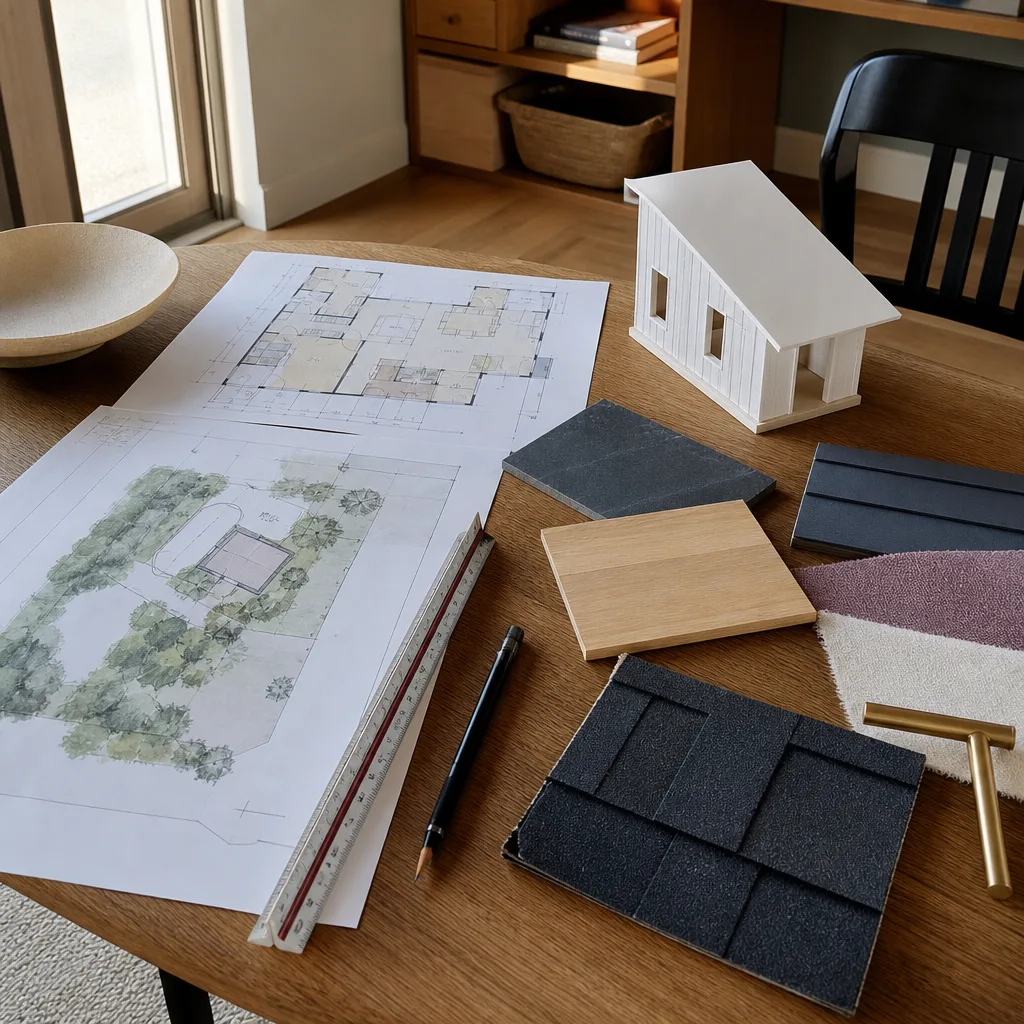
Here is exactly what we do, in order, when we take on your compliance work in Long Beach:
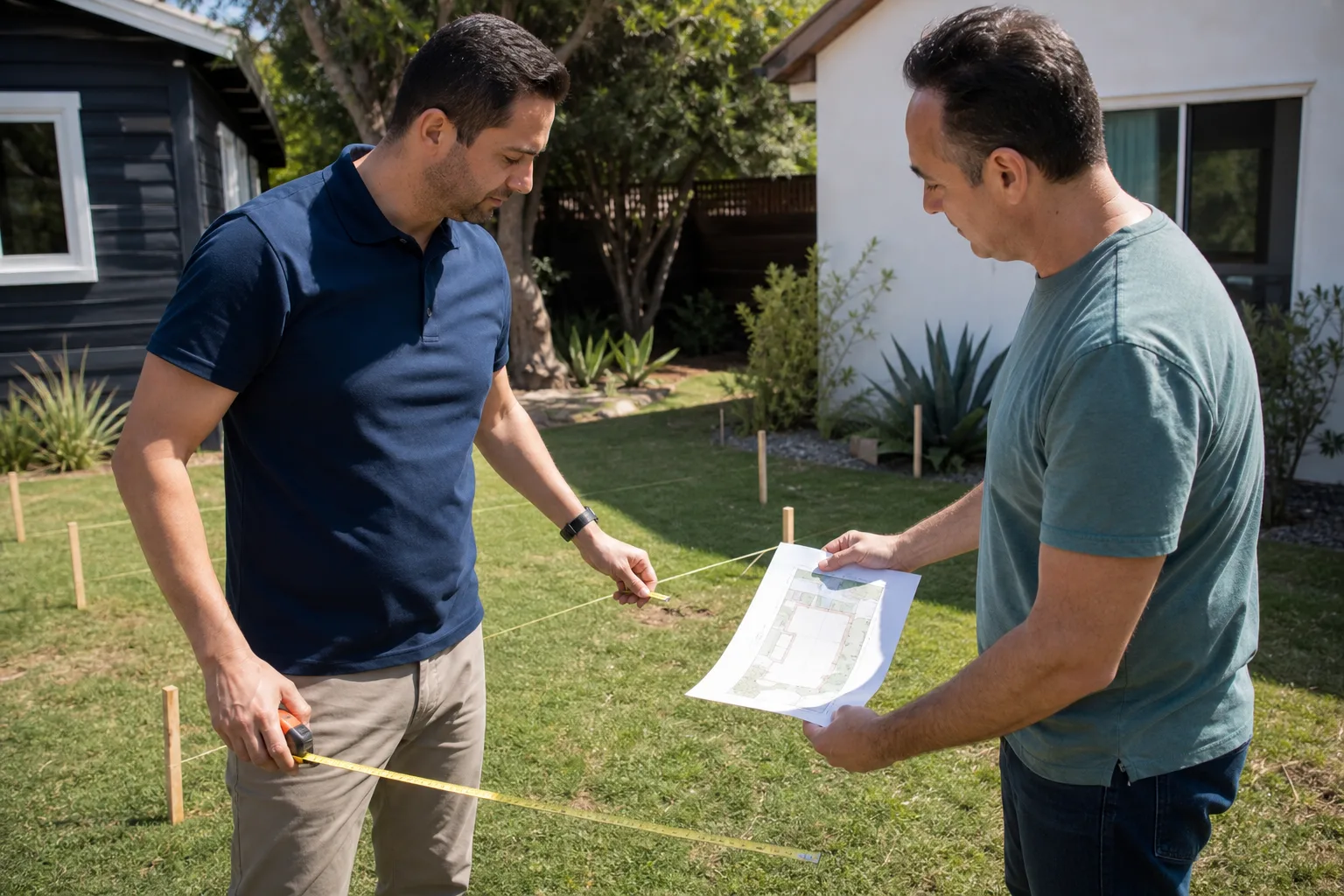
- Parcel and zoning review. We start by pulling your property’s zoning designation, lot dimensions, and any overlay districts from Long Beach Development Services and the county assessor’s maps. This tells us your base buildable envelope before we consider anything else.
- HOA document review. If you have an HOA, we request your CC&Rs, bylaws, and any design guidelines, then read them against your proposed project. We’re looking for restrictions on structure type, height, exterior materials, parking, and whether ADUs are addressed at all. Some older HOA documents predate California’s ADU-friendly state laws and need careful interpretation.
- Feasibility report. We give you a written summary: what’s buildable under current rules, what needs a variance, what your HOA is likely to fight, and what the realistic timeline is. This report includes real numbers, not vague estimates.
- Design alignment. We work with your design team (or ours) to shape the project so it passes review: adjusting setbacks, choosing cladding systems like James Hardie products that read well to review committees, or adapting a Tuff Shed base structure where appropriate for accessory uses.
- Submittal and management. We prepare and submit the required filings to Long Beach Development Services and your HOA architecture committee. We track responses, answer reviewer questions, and negotiate corrections without you having to write a single letter.
- Permit-ready handoff. When approvals are in hand, your project moves into the full ADU Design & Permitting phase with clean paperwork that won’t hit a wall later.
Every step is covered by the Threshold Standard, which means a written price for the compliance phase before we start, a 365-Day Done Right Promise on our workmanship, and the option of a free second visit if any element of our compliance work doesn’t hold up.
How Much Does HOA & Zoning Compliance Cost in Long Beach?
HOA and zoning compliance work in Long Beach typically runs $1,800 to $6,500, depending on the complexity of your parcel, the aggressiveness of your HOA, and whether variances or historic review are involved. A straightforward single-family lot with no HOA and a standard detached ADU on a conforming parcel starts at the lower end. A hillside lot with a historic overlay, an active design committee, and a requested variance can push past the top of that range and into $8,000 or more if significant negotiation or redesign is required.
Here is a breakdown of typical line items we see in the Long Beach market:
| Compliance Task | Typical Cost Range |
|---|---|
| Parcel zoning and feasibility review (no HOA) | $800 – $1,500 |
| Full HOA document review and response strategy | $500 – $1,200 |
| Historic district review preparation | $1,000 – $2,000 |
| Variance application and representation | $1,500 – $3,500 |
| Complete compliance management (typical ADU) | $2,500 – $6,500 |
These are the real numbers we’ve seen on Long Beach projects. What actually moves the price is not just the city’s fee schedule, it’s the number of review cycles your project requires. An HOA that requests three rounds of exterior material changes costs more to manage than one that approves the first submittal. A lot with a nonconforming garage from 1947 that needs a setback variance costs more than a clean, conforming lot in a newer subdivision.
We give you a written price for the compliance phase before we begin. No hourly billing surprises, no discovery fees that appear after the fact. If we think your project will require variance work, we tell you in the feasibility report and price it there, not later. Call (562) 317-7042 for a free estimate on your specific lot and situation.
HOA & Zoning Compliance in Long Beach: What Makes It Different Here
Long Beach is not one zoning market. It’s a patchwork of neighborhoods with distinct rule sets, and anyone who tells you ADUs are uniformly permitted here is oversimplifying. The city has made ADU permitting more accessible in recent years through its ADU ordinance updates, but the specifics on the ground still vary block to block.
In the flat, gridded neighborhoods of central Long Beach, like the areas near Long Beach Boulevard and the Wrigley district, lot dimensions are generous and ADU setbacks are often workable, but parking requirements and alley access rules can complicate a garage conversion. In the beach-adjacent neighborhoods like Belmont Shore, Peninsula, and Naples, lots are tighter, setbacks are more restrictive, and coastal zone rules can add another review layer entirely. In East Long Beach neighborhoods like Los Altos and El Dorado Park, larger lots make detached ADUs feasible, but HOA communities are more common there, and those HOAs often have architectural guidelines written decades before ADUs were a mainstream option.
What we’ve learned from doing this work in Long Beach since 2006 is that most compliance failures are not code failures; they’re communication failures. A homeowner submits plans without reading their HOA’s design guidelines. A designer draws a roofline that violates a height limit the homeowner didn’t know existed. A contractor pulls a permit for a “storage room” that the HOA later flags as an unapproved dwelling unit. These are the problems we prevent by reading everything first and talking to the right people early.
One more thing we see routinely: Long Beach homeowners who bought a Tuff Shed or similar accessory structure and later want to convert or expand it into an ADU. The zoning path for that is different than a new build, and your HOA may have regulations about pre-built structures that predate your purchase. We handle these cases regularly and can tell you quickly whether your shed-to-ADU plan is realistic before you spend more money on it.
HOA Rules vs. Zoning Rules: Two Different Gates
It’s useful to separate these in your mind, because they operate on different timelines and different authorities.
Zoning rules come from the City of Long Beach. They govern what you can build on your parcel: setbacks, height, lot coverage, parking, and now, under California state law, the baseline permissibility of ADUs on any single-family lot. The city has the power to approve or deny your permit, and they operate through Long Beach Development Services at City Hall.
HOA rules come from a private contract you signed when you bought your home. They govern aesthetics, exterior materials, rooflines, sometimes even the color of your front door. An HOA cannot override state law that permits ADUs, but it can enforce design guidelines that make your ADU more expensive or require redesigns that add months to your timeline. And HOAs move at their own speed. Some meet monthly; some quarterly. If you miss a submission window, you can lose an entire quarter waiting for the next review meeting.
The sequence matters. Zoning approval without HOA approval leaves you with a permit you can’t actually enjoy because your HOA can fine you for noncompliance. HOA approval without zoning approval leaves you with goodwill and no legal right to build. We handle both gates in the right order and manage the communication so you’re not stuck mediating between a city planner and a volunteer architecture committee.
What We Check in a Long Beach HOA & Zoning Review
When we open a compliance file, here is what we’re actually looking at, in plain language:
- Zoning district and permitted uses. Whether your parcel is zoned for a detached ADU, an attached addition, or a conversion, and what Long Beach’s current ADU ordinance allows for your lot type.
- Setback requirements. The gap between your proposed structure and every property line, measured against both city code and HOA guidelines where they differ.
- Height and lot coverage limits. How tall your ADU can be and what percentage of your lot can be covered by structures. In some Long Beach neighborhoods, lot coverage is already near the limit, which affects whether you can add square footage at all.
- HOA design guidelines. Exterior finishes, roof pitch, window styles, and whether prefab or modular structures like Plant Prefab or Abodu models are acceptable to your review board.
- Parking and access requirements. Whether your ADU triggers a parking requirement, whether alley access or driveway placement affects the design, and how your HOA’s parking rules interact with the city’s.
- Historic district overlays. Whether your property sits within a designated historic district and what that means for exterior materials and design choices.
Each of these items gets a written finding in our feasibility report, not a verbal hand-wave. If we find a problem, we tell you what it means, what it costs to fix, and whether it’s a dealbreaker. We’ve had conversations with homeowners where we recommended against a project because the compliance burden outweighed the value of the addition. We’ll have that conversation with you honestly if it applies to your lot.
Working With HOAs: What Actually Works
HOAs are run by people, usually volunteers, often with strong opinions and limited time. Getting an ADU approved by an HOA in Long Beach is less about legal argument and more about presentation. Here’s what we’ve learned doing this work for nearly two decades:
Submit complete packages the first time. HOA architecture committees review hundreds of items a year. A submission that is missing material samples, site plans, or color specifications goes to the bottom of the pile or gets rejected on completeness grounds alone. We prepare packages that answer questions before they’re asked.
Choose materials that read as permanent, not temporary. Boards respond better to proposals that look like they belong. James Hardie fiber cement siding, for example, is widely accepted in Long Beach HOAs because it resembles traditional wood siding while performing better in coastal conditions. We use material choices strategically to earn approvals, not just to satisfy code.
Respect the review timeline, but stay persistent. If your HOA meets for design review on the first Tuesday of the month, your package needs to be in their hands two weeks before that meeting. Miss a deadline and you wait a full cycle. We track these windows and get your submittal in on time.
Document everything. Every email, every decision, every condition attached to an approval gets saved. If the HOA later disputes whether a design change was approved, your records decide the argument. We maintain the file for you.
None of this is glamorous, but it is exactly the kind of unglamorous work that determines whether your ADU gets built at all. The Sutton name comes from the old English word for a south farm, which is the kind of settled, rooted decision we help you make when you’re adding a second home to your lot. That decision deserves to be made on real information, not on a salesperson’s optimism.
Common HOA & Zoning Problems We Fix in Long Beach
Some of the situations we step into are already messy. Here are the ones we see most often in Long Beach and how we handle them:
- HOA rejection of an ADU that state law permits. State law generally allows ADUs on single-family lots, but HOAs can still impose design review requirements that effectively block a project. We respond with the right documentation and, where necessary, the legal framework that limits what an HOA can and cannot restrict.
- Nonconforming existing structures. Older Long Beach homes often have garages or accessory buildings that were built before current zoning rules existed. If you want to convert a nonconforming garage, you may need to bring the entire structure into compliance or seek a variance. We evaluate these cases carefully and give you the real numbers before you commit.
- Setback violations on proposed designs. We see a lot of ADU drawings that ignore setbacks entirely, produced by designers who haven’t read Long Beach’s specific ordinances for your zone. We catch these early, before you pay for permit submittal.
- Unpermitted existing work. If a previous owner built a room or converted a garage without permits, that unpermitted work affects your ADU application. We assess what needs to be legalized, what it costs, and whether it blocks your project.
- Historical district conflicts. If your home is in a Long Beach historic district and you want to add a modern ADU, you need a thoughtful approach to materials and design that respects the district’s guidelines without ballooning your budget. We’ve worked through enough of these to know what review boards will accept.
If you’re already in one of these situations, the sooner we look at it, the more options you have. Complaints and violations don’t get better with time. Call (562) 317-7042 and we’ll tell you what you’re actually facing.
Can You Handle Compliance the Same Day?
We can start the same week in most cases. The initial parcel and zoning review typically takes 1 to 3 business days, depending on how quickly Long Beach Development Services responds to record requests. HOA document review depends on how fast your HOA management company provides the CC&Rs and design guidelines, which varies from a few days to a few weeks.
The full compliance process, from first review to permit-ready status, typically runs 3 to 10 weeks for a standard ADU in Long Beach. Variances add time, often 2 to 6 months, depending on hearing schedules. Historic review adds its own cycle. We’ll give you a written timeline once we’ve seen your parcel and your HOA package, and we’ll update you at every step. We don’t disappear between submittals.
If you’re in an emergency situation, like an HOA violation notice with a deadline, call us immediately. We prioritize those cases and can often get your response prepared within days. Our phone is answered by a live person 24 hours a day, 7 days a week, so you won’t wait through a voicemail tree when time matters.
FAQs – HOA & Zoning Compliance
Do I really need HOA approval for an ADU in Long Beach?
Yes, if your home is part of a homeowners association with design review authority, you need HOA approval before you build, even if the City of Long Beach permits the ADU under state law. The HOA cannot ban ADUs outright in most cases, but it can impose design guidelines that affect your exterior materials, roofline, and placement. Skipping HOA approval means your HOA can fine you, demand changes, or take legal action even after the city issues a permit. Call (562) 317-7042 and we’ll review your specific CC&Rs to tell you exactly what your HOA can and cannot restrict.
How much does an HOA variance or zoning variance cost in Long Beach?
A zoning variance application in Long Beach typically costs $1,500 to $3,500 in professional fees and city filing costs, not including any redesign work required to make the variance approvable. HOA variance requests, which are less formal, typically run $500 to $1,200 in preparation and representation time. The bigger cost risk is the delay: a variance that requires a public hearing can add 2 to 6 months to your project timeline. We’ll tell you in the feasibility report whether a variance is likely to succeed before you spend the filing fees.
My HOA said no to a prefab ADU. Can you help overturn that?
Usually, yes. Prefab and modular ADUs from brands like Abodu, Plant Prefab, and others are generally permitted under California state law, and an HOA cannot reject them solely because they’re prefabricated. What HOAs can do is impose design review standards on exterior appearance, and many prefab models can be finished to meet those standards with the right cladding and roof treatment. We’ve successfully presented prefab designs to Long Beach HOAs by addressing the actual concerns, usually about appearance and permanence, rather than arguing about prefab as a category.
What happens if I build an ADU without HOA or zoning approval in Long Beach?
If you build without proper approvals, you face a range of consequences: the city can issue stop-work orders, require tear-down or modification of unpermitted work, and withhold final occupancy. Your HOA can fine you, place liens on your property in some cases, and require removal or alteration of the structure. Unpermitted work also complicates future sales, since buyers’ lenders often require proof that all additions are legal. None of these outcomes are worth the short-term savings of skipping compliance.
Is it cheaper to handle HOA and zoning compliance myself?
It can be cheaper in direct fees, but the cost of getting it wrong is typically far higher. A rejected permit application, a nonconforming design that needs rework, or an HOA violation that requires legal response all cost substantially more than our compliance fees. What we charge for this phase, typically $2,500 to $6,500 for complete management, buys you the confidence that your drawings, submittals, and HOA responses are correct the first time. The alternative is learning zoning and HOA rules through your own mistakes, which is the most expensive education available.
Why Sutton ADU Long Beach for HOA & Zoning Compliance
Sutton ADU Builders has been serving Long Beach homeowners since 2006 as the ADU-specialist member of the Threshold Group family of home-service companies. Our compliance work carries the same guarantees as our construction work: a written price before any work begins, a 365-Day Done Right Promise that covers our workmanship for a full calendar year from project completion, and a free second visit if any element of our compliance work fails.
Every person who works on your file, from the compliance specialist who reads your HOA documents to the project manager who tracks your variance hearing, is background-checked and identity-verified under the Threshold Verified standard. You’ll know their name and see their photo before they come to your property, and they’ll arrive in a clean, marked uniform and show a photo ID badge at your door. That may sound like a small thing, but when you’re inviting someone into your home to discuss your property lines and your HOA’s rules, knowing exactly who they are matters.
We also bring working experience with the ADU product lines that Long Beach homeowners actually consider: Abodu, Plant Prefab, Tuff Shed conversions, and James Hardie exterior cladding systems. That means our compliance recommendations are grounded in real build options, not abstract design theory.
Miles Hartwell leads our Long Beach operation, and he’s been doing this work long enough to know that honesty about feasibility is worth more than optimism about possibility. He’d rather tell you your lot can’t support the ADU you want, and save you $40,000, than take your money and watch it fail at a zoning hearing.
If you’re planning an ADU, a garage conversion, or a room addition in Long Beach, and you want to know the rules before you spend money on plans, call (562) 317-7042 today. We’ll review your parcel, read your HOA documents if you have them, and tell you exactly what’s buildable on your lot and what it will cost to get there. The estimate is free, and it comes with the same written-price guarantee as everything else we do.
Written by Miles Hartwell, Owner at Sutton ADU Long Beach, serving Long Beach.