Plant Prefab New Detached ADU: The Long Beach Owner’s Guide
If you own a Plant Prefab detached ADU in Long Beach and something on the structure itself has failed, we stock the replacement components and can typically have the new part installed within a few business days, not weeks. Most Plant Prefab new detached ADU component replacements in the Long Beach market run between $800 and $6,500 installed, depending on whether we’re addressing siding, roofing, a window assembly, or a structural connection point. Homeowners usually discover the failure the same way: a visible gap that wasn’t there last season, water staining on an interior corner, or a door that suddenly won’t latch square.
We’re Sutton ADU Long Beach, and we work on Plant Prefab structures regularly. We’re an independent service provider, not affiliated with Plant Prefab, but we know their systems well enough to diagnose and replace failed parts without guessing. And before anyone sets foot on your property, you’ll have their name, photo, and a written price in your hand. That’s how we’ve operated since 2006, and it’s the reason homeowners in Belmont Shore, Naples, and Bixby Knolls call us when a prefab ADU starts showing its age.
Key Takeaways
- We stock Plant Prefab-compatible replacement components for detached ADUs and install them throughout Long Beach.
- Most replacements run $800 – $6,500 installed, with a written price locked in before work starts.
- We’re independent from Plant Prefab, but we know their assembly methods and failure points from years of hands-on work.
- Every technician is background-checked, identity-verified, and photo-badged before they arrive.
- The 365-Day Done Right Promise covers our workmanship for a full year. If something isn’t right, we make it right.
Which Plant Prefab Models This Applies To
Plant Prefab builds detached ADUs in a few distinct lines, and the replacement components differ depending on which system your structure uses. The most common units we service in Long Beach are the panelized wall and roof assemblies that Plant Prefab ships as flat-packed modules for on-site assembly. If your unit was built after roughly 2019, it likely uses their high-performance wall panels with integrated weather barriers, and the failure point is almost always where panels meet at corners or where the roof line ties into the wall cap.
To identify the right part, look for the serial tag inside the utility closet or on the back side of the main panel near the electrical box. The model designation will be a letter prefix followed by dimensions, and that tells us the panel series and fastener spacing. For OEM replacements, we order from Plant Prefab’s parts network with a 7 to 14 day lead time in most cases. For weather-exposed components like trim, flashing, and door thresholds, we often recommend a higher-durability aftermarket equivalent that’s better suited to Long Beach’s salt air and afternoon sun. The honest truth: OEM is fine, but Plant Prefab’s standard aluminum flashing was never designed for a lot within two miles of the ocean, and we’ve replaced enough corroded flashing in Belmont Shore and the Peninsula to know the aftermarket stainless works better here.
One compatibility gotcha worth knowing: Plant Prefab changed their window rough opening dimensions in 2022. If your unit is older than that, an off-the-shelf window from the big box store will not fit without reframing, and reframing costs more than the window. We keep the older specs on file and can source the correct size without a guessing game on your dime.
Signs Your Plant Prefab New Detached ADU Is Failing
- Gaps at panel seams. Long Beach’s dry summers shrink the engineered wood panels, and when the fall marine layer arrives, the seams reopen. If you can slide a quarter into a seam that was tight when the unit was new, the weather barrier behind it is being exposed and will start failing. This is the earliest warning sign, and the cheapest time to fix it.
- Water staining on interior ceiling corners. This almost always traces back to the roof-to-wall transition flashing, not the roof membrane itself. Plant Prefab’s standard detail works, but on windy lots with driving rain from the southeast, the flashing can lift over time.
- Sticking or sagging door slabs. Prefab units settle differently than stick-built structures. A door that suddenly drags usually means the floor cassette or the door header has shifted, and shimming the hinge will only buy you weeks, not a fix.
- Condensation between window glazing panes. Once the seal on a double-glazed unit fails, the only repair is replacement. Ocean air accelerates this in Long Beach, especially on south-facing walls.
- Popping or creaking during temperature swings. Some noise is normal for a panelized structure. But a sharp pop, especially near the wall-to-floor connection, can indicate a fastener that’s working loose against the hold-down, and that’s a structural issue, not a cosmetic one.
Replacement Cost & What’s Included
In Long Beach, most Plant Prefab ADU component replacements fall into these ranges, installed:
- Panel seam repair and resealing: $800 – $1,800 depending on how many seams and how much prep work is needed.
- Flashing replacement (roof or window): $1,200 – $3,200 for stainless or heavy-gauge aluminum, including removal of the corroded original.
- Window or door assembly replacement: $1,800 – $4,500 depending on the unit’s vintage and whether the rough opening is pre-2022 or current spec.
- Structural fastener or hold-down repair: $2,500 – $6,500 including engineering sign-off where Long Beach building code requires it.
Every one of those numbers includes the part, labor, clean-up, and our written workmanship warranty. You’ll get a line-item quote before we order anything, and that number does not change unless we uncover something structurally dangerous that no one could have seen from the outside, in which case we stop work, show you what we found, and get your sign-off before spending another dollar. That’s the Threshold Standard, and it applies to every job we do in Long Beach.
DIY or Call Us?
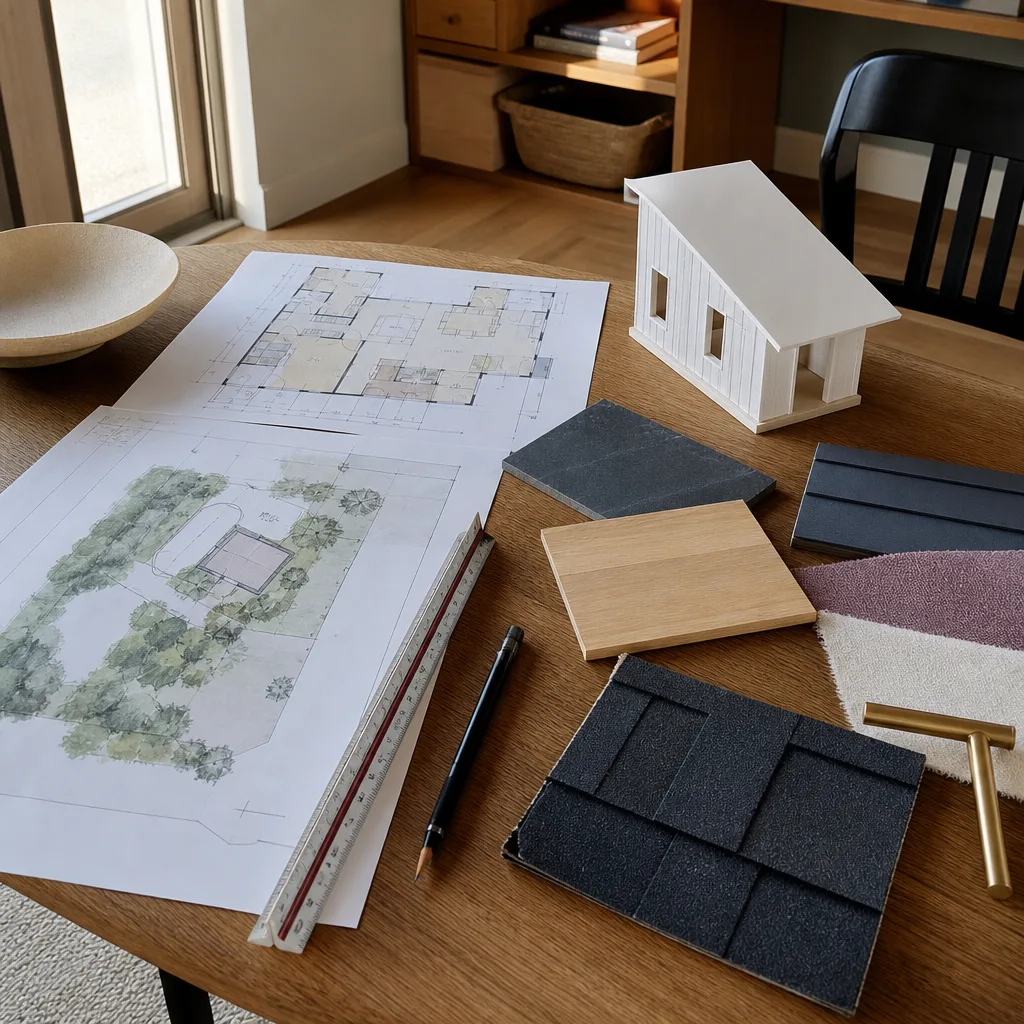
Some things are safe to check yourself. You can mark panel seams with painter’s tape and watch them over a few weeks to see if gaps are growing. You can inspect flashing with a flashlight and look for lifted edges or white corrosion powder. You can run a bead of clear silicone along a hairline seam as a temporary stopgap. Those are all reasonable homeowner moves.
What you should not do is loosen or tighten structural fasteners, pull flashing loose, or attempt to realign a door by cutting into the frame. Plant Prefab’s systems are engineered, and a wrong torque on a hold-down bolt or a clumsy cut into a wall panel can turn a $1,200 repair into a $6,000 structural remediation. Miles Hartwell has spent enough years crawling through ADUs in Long Beach to know exactly where this goes wrong, and it goes wrong fast. If you’re seeing movement, water, or a door that won’t close, call us at (562) 317-7042. We’ll send someone who knows Plant Prefab’s systems, and you’ll have their name and photo before they ring the bell. Know what you’re agreeing to before you pick up the pen.
FAQs
With proper maintenance, the structural shell of a Plant Prefab ADU should last 50+ years, but exterior components like flashing and weather seals typically need attention every 8 to 12 years in Long Beach’s coastal conditions. Salt air, intense afternoon UV, and seasonal expansion and contraction all accelerate wear on the weather-exposed parts, even when the structure itself remains sound. A well-maintained unit on a protected inland lot like Los Altos will age slower than one on the Peninsula, where onshore wind drives salt mist into every seam. Call (562) 317-7042 if you want us to walk your property and tell you what’s aging and what can wait.
Some things can be repaired, and some cannot. Panel seam gaps can often be cleaned, prepped, and resealed without full replacement, which is why catching them early matters. Corroded flashing can sometimes be patched, but once the metal has pitted through, a patch becomes a countdown to a water leak. Failed window seals and structural fastener issues are always replacement jobs, not repairs, because there’s no path back to the original performance. For an honest assessment without a sales pitch, call us at (562) 317-7042 and we’ll give you a straight answer.
For components we stock common sizes of, like flashing, weather stripping, and standard window assemblies, the on-site swap typically takes one day. For OEM parts ordered from Plant Prefab’s network, expect 7 to 14 days for the part to arrive, then one to two days on site for installation, depending on what we’re replacing. Structural repairs take longer because Long Beach may require an inspection, but we handle the permit paperwork and coordinate the inspector. You’ll get a timeline in writing before we start.
Yes, we stock and install compatible components for Abodu, Cover, and Dvele systems too, plus we do Tuff Shed conversions and James Hardie exterior work. Many of the failure modes are similar across panelized prefab brands, but the specs are not interchangeable, so matching the exact component to the exact model matters. We’d rather tell you the part isn’t in our truck inventory and order the right one than install something close-enough that fails again in a year.
Contact Sutton ADU Long Beach
If your Plant Prefab detached ADU in Long Beach needs a replacement part, don’t guess and don’t wait for a small issue to become a water intrusion problem. Call Sutton ADU Long Beach at (562) 317-7042 for a free estimate. We’ll send a background-checked, photo-badged technician with the right tools and the right parts, and you’ll have a written price before any work begins.
Written by Miles Hartwell, Owner, Sutton ADU Long Beach at Sutton ADU Long Beach, serving Long Beach and nearby areas.