Last updated October 15, 2026
ADU Warning Signs: A Long Beach Homeowner’s Reference Guide
Here’s a counterintuitive fact we’ve learned after nearly two decades building accessory dwelling units in Long Beach: the most expensive ADU problems almost never start with a cracked slab or a bad roof. They start with a contract clause nobody read, a permit pulled in the wrong name, or a crew that showed up with no connection to the company you hired. The structural failures you can see are nearly always downstream of process failures you couldn’t. This guide walks through the warning signs that show up before the foundation is poured, because catching a vague scope description in week one saves you more money than catching tilted drywall in month six. For a deeper dive, see The Complete Guide to ADU in Long Beach. We’ve organized it by phase: contract, pre-construction, permits, on-site work, and post-construction, with Long Beach specifics throughout.
Quick Answer
The most reliable ADU warning signs in Long Beach appear in the contract and permitting process before construction starts. Watch for vague scope language like “as needed,” missing permit-pull responsibility clauses, contractors who discourage you from attending inspections, and crews arriving without ID matching the contract. A builder who won’t name exactly who will be on your property in writing is signaling that other things were left vague on purpose.
Table of Contents
- Contract Red Flags: What Vague Language Actually Means
- Pre-Construction Behavior: Questions They Don’t Want You to Ask
- Permit Problems: Who Pulled It and Why It Matters
- On-Site Warning Signs During Construction
- Post-Construction Warning Signs: After the Dust Settles
- What Long Beach ADU Costs Reveal About Contractor Quality
- Common Mistakes to Avoid
- When to Call a Professional
- Frequently Asked Questions
- The Bottom Line
Contract Red Flags: What Vague Language Actually Means
Long Beach homeowners tend to focus on the bottom-line number in an ADU contract and skim everything else. That’s understandable, but the language above the number is where problems get baked in. We’ve reviewed dozens of competitor contracts in the Long Beach market, and the patterns are consistent. The words that predict a bad build are almost always the words that let someone off the hook later.
The first red flag is scope language that uses “as needed,” “as required,” or “to industry standard” without defining what that standard is. A contract that says “foundation work as needed” doesn’t tell you whether that means a 4-inch slab or an 18-inch footing with rebar. It means the contractor gets to decide later, and later decisions cost money. The same applies to phrases like “electrical upgrades as necessary” or “insulation per code.” Long Beach has specific building code requirements including Title 24 energy standards, and a contract that doesn’t reference the actual standard it will meet is leaving room for the minimum viable interpretation.
A second red flag: no clause stating who pulls permits. In Long Beach, permits for an ADU must be pulled through the city’s online portal, and the responsible party on that permit is legally accountable for code compliance. If your contract doesn’t say “Contractor shall obtain all required permits and schedule all required inspections in the contractor’s name,” you may be signing up to be the permit holder yourself. That shifts liability for failed inspections to you. This is one of the most common and least understood warning signs in Southern California ADU contracts.
A third: arbitration clauses buried in exhibit pages. California law allows binding arbitration in construction contracts, but that clause determines where and how you can pursue a dispute. If the arbitration venue is in another county or the clause waives your right to small claims court, that’s not an accident. It’s a signal that the builder has been through disputes before and wants to make yours harder to pursue.
Contract checklist before you sign:
- Scope of work names specific materials, dimensions, and finishes – not “as needed” language
- Permit responsibility is explicitly assigned to the contractor, in writing
- Change order process is defined, including how prices adjust and who approves
- Arbitration terms are visible, readable, and don’t waive your small claims access
- The crew who will be on your property is identified or the vetting standard is named
- Warranty terms are written with a specific duration and coverage definition
At Sutton ADU Long Beach home in our own contract practice, every project carries the Threshold Standard: a written price before work begins and a 365-Day Done Right Promise covering completed workmanship for one full calendar year. That promise is printed on every contract, not verbal. If a builder won’t put their guarantee in writing with a specific duration, the guarantee doesn’t exist in any enforceable sense.
Pre-Construction Behavior: Questions They Don’t Want You to Ask
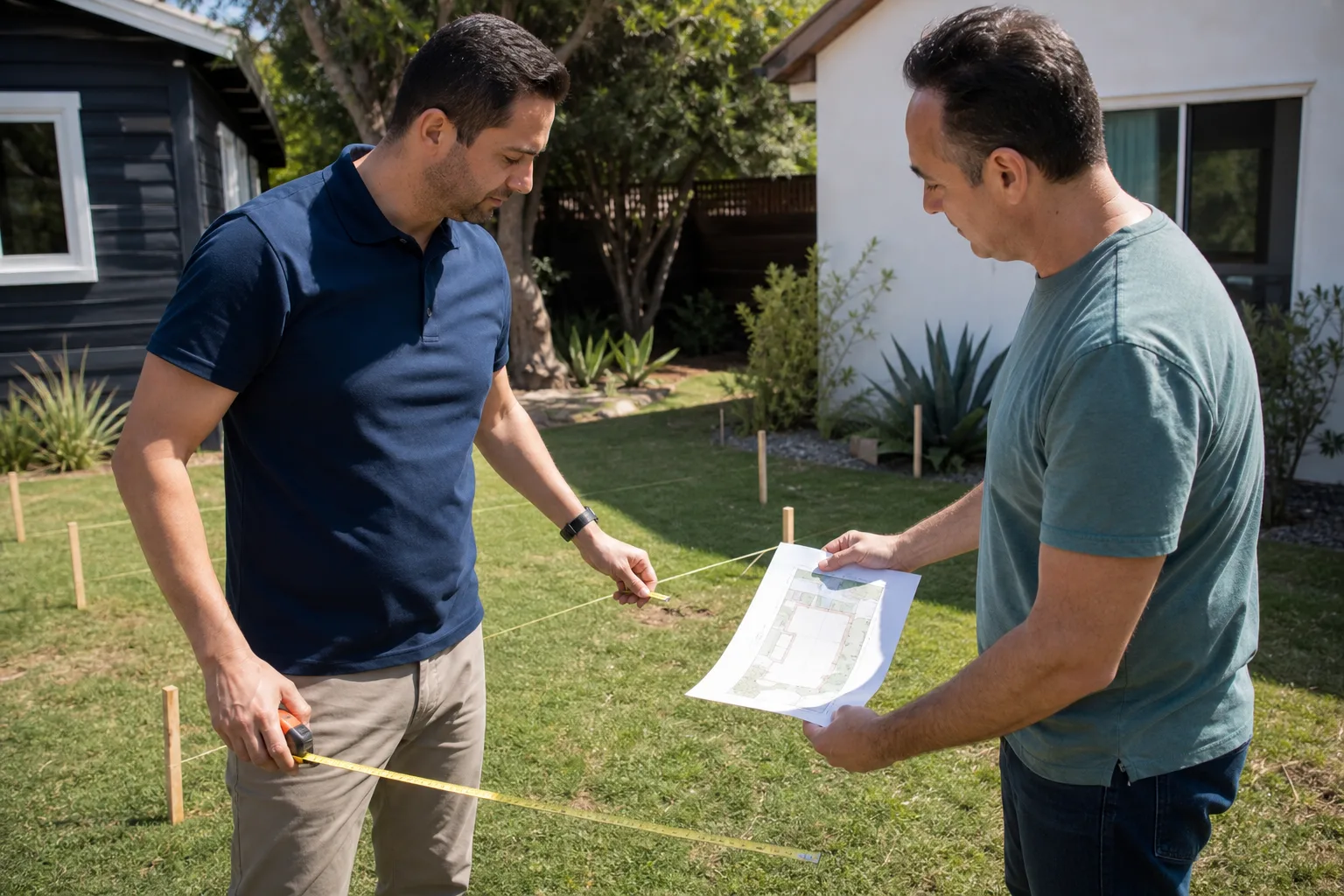
Before any concrete is poured in Long Beach, there’s a design and approval period that can run four to eight weeks depending on whether you’re doing a garage conversion, a prefab ADU from a brand like Plant Prefab, or a fully custom detached build. If you’re weighing whether to manage that yourself, our DIY vs Professional ADU: The Long Beach Homeowner’s Decision Guide breaks down what each path actually requires. What happens during that window tells you more about the builder than any marketing brochure.
The behavior to watch closest: how does the contractor respond when you ask questions in writing? A builder who gives verbal-only answers to written questions is creating a paper trail that says nothing. If you email a question about a setback (the required gap between your new structure and the property line, which in Long Beach is typically 4 feet for detached ADUs) and they call you back with an answer instead of replying in writing, that’s a warning sign. Written questions deserve written answers. The person who avoids the written record is often avoiding accountability.
A second warning sign: the contractor encourages you to skip inspections or tells you “we’ll handle it, you don’t need to be there.” You absolutely need to be there, or have someone you trust there. Long Beach inspection appointments are posted, and the inspector’s sign-off is your only independent verification that the work meets code before it’s covered by drywall or stucco. A legitimate builder wants you at inspections because your presence confirms what they’re doing right. A builder who steers you away is steering you away from watching something.
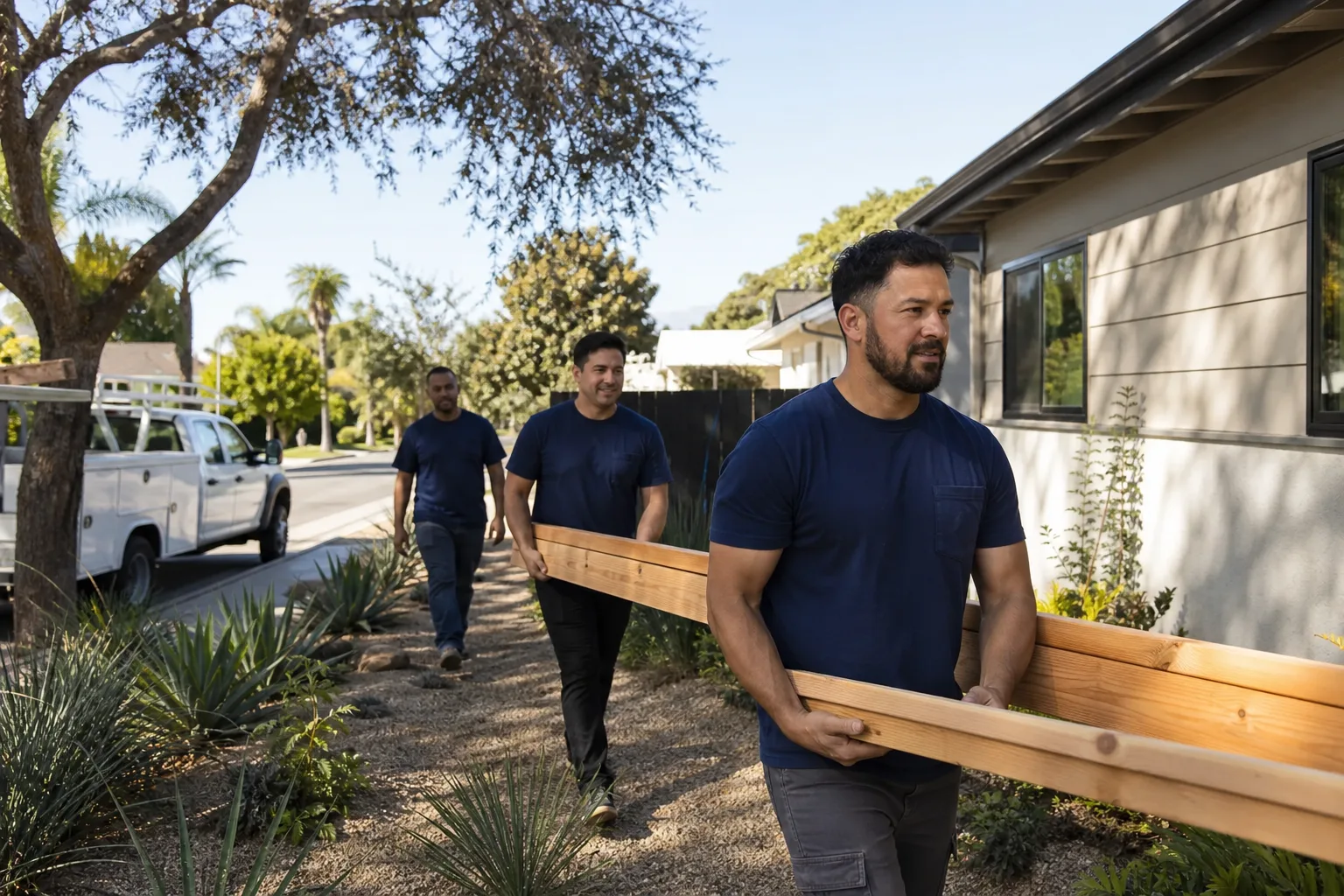
Third: the crew conversation. Ask directly: “Who exactly will be on my property, and will their names match the company on the contract?” If the answer is “we use different subs depending on the week” with no vetting standard named, that’s a warning sign specific to home security. In Long Beach, where many homeowners are adding ADUs specifically to house family members or aging parents, the people on your property matter deeply. We’ve built our entire ADU Builders in Long Beach practice around proving exactly who is coming: every technician background-checked, identity-verified, and photo-badged, with their name and photo sent to you before they arrive. If your builder can’t tell you who’s coming to your door, the construction quality is the least of your concerns.
Permit Problems: Who Pulled It and Why It Matters
Long Beach has one of the clearer online permit portals in Los Angeles County. You can search by address and see what permits have been pulled, their status, and who is listed as the responsible party. This is free to check and takes five minutes. Very few homeowners do it. The ones who skip it are the ones who discover later that no permit existed at all.
Here’s why the name on the permit matters for liability. In California, the permit holder is the party responsible for meeting code and passing inspections. If the permit is pulled in your name as the homeowner and the contractor walks away mid-project, you are now the party holding an open, non-compliant permit. The city can place a stop-work order on your property that sits there until the work is corrected by someone else. If the permit is in the contractor’s name, that builder is on the hook with the city, not you. A contract that makes you the permit holder is shifting risk onto you.
Here’s the step-by-step verification process we recommend to every Long Beach homeowner before construction starts:
- Ask the contractor for the permit number after the permit is pulled. It should be provided without hesitation.
- Go to the City of Long Beach permit portal and search your address.
- Confirm the permit type matches your project (detached ADU, garage conversion, room addition).
- Check the “Responsible Party” field. Verify the contractor’s name or company appears, not yours alone.
- Confirm the permit status is “Issued,” not “Submitted” or “Pending Review” when construction begins.
- Print or screenshot the permit for your records.
Also worth noting for Long Beach specifically: if your ADU involves a Tuff Shed conversion or a prefab unit from a manufacturer like Abodu, the manufacturer often handles factory certification but the site work still requires a city permit. Don’t accept the manufacturer’s paperwork as proof that city permits were pulled. They’re separate processes, and only the city permit carries inspection authority in Long Beach.
On-Site Warning Signs During Construction
Once construction starts, you’ll have a crew on your property for weeks or months. Most Long Beach homeowners aren’t construction experts, and you don’t need to be. The warning signs worth watching for are process-based, not technical.
The most important one: work happening before a permit is posted. In Long Beach, the issued permit (or a copy of it) must be posted on the job site, typically in a visible location like a front window or fence. If crew members are digging, framing, or doing electrical rough-in and there’s no posted permit, stop the conversation and ask to see it. “We left it at the office” is not an acceptable answer. No permit posted means either the permit wasn’t pulled or the builder doesn’t consider permit visibility a priority. Both are problems.
Second: unfamiliar crew members who can’t produce ID matching the contract. This is the security concern most Long Beach homeowners quietly worry about and rarely ask. If the contract named a project lead and the person at your door can’t show a photo ID matching that name or matching any name on the paperwork, that’s a legitimate red flag. The Room Addition Contractor in Long Beach model we run operates on the Threshold Verified standard: every technician’s name and photo is sent to you before arrival, and they show a photo badge at the door. If a builder won’t do this for you, ask yourself why.
Third: lunchtime shortcuts that reveal broader behavior. We’re not being cute here. Watch how the crew handles basic site discipline: are materials stored neatly, is trash contained, are temporary fences up if required, are they respecting your property’s access points? A crew that treats your driveway like a lumberyard and your front yard like a break room is a crew that cuts corners where you can’t see them either. Site order is a proxy for work quality, and it’s visible to anyone.
Fourth: the change order pattern. Some change orders are legitimate – you change your mind on finishes, or unexpected soil conditions in a Long Beach lot require different footing depth. But a pattern of change orders arriving every week, especially for items that were in the original scope, is a warning sign. “The original price didn’t include the trenching” is not a change order if the original scope said “all site work included.” Track change orders in writing, and require each one to specify what changed, why, and the new price before the work proceeds.
Post-Construction Warning Signs: After the Dust Settles
The build is done. The crew is gone. This is when most Long Beach homeowners finally exhale and stop looking for problems. It’s also when the most expensive problems surface, because they’re buried behind walls and under stucco where you can’t see them. Our Home Addition Contractor Maintenance Checklist for Long Beach Homeowners covers what to monitor once construction ends.
The first post-construction warning sign: missing inspection sign-off cards. Every city inspection in Long Beach generates a record. At a minimum, ask for the final inspection sign-off from the city, not a verbal confirmation from the contractor. If the builder says “the city signed off but we don’t have the card,” that’s a phone call to the Long Beach permit portal to verify it yourself. A builder who completed the job but never scheduled the final inspection has left you with an open permit that can affect your property value when you sell.
Second: no certificate of occupancy. A completed ADU in Long Beach requires a certificate of occupancy before anyone can legally live in it. This is separate from the final inspection and is issued by the city. If your contractor tells you the ADU is ready but can’t produce this document, or says “it’s coming in the mail,” or suggests you can move family members in before it arrives, that’s a warning sign. Occupying an ADU without a certificate of occupancy can void your homeowner’s insurance on the structure and create legal exposure if a tenant is involved.
Third: utility connections that were “self-certified” instead of inspected. Gas, electrical, and water hookups for a new ADU require separate permits and inspections in Long Beach. The phrase “we did the connection ourselves and it’s fine” is not a certification. It’s a red flag. Uninspected electrical work is a fire risk, uninspected gas work is an explosion risk, and uninspected plumbing can leak into your slab. These are the exceptions where we get direct with homeowners about safety: if a builder tells you a utility connection was done without an inspection, have it inspected by the relevant utility or a licensed professional before anyone sleeps in that space.
Fourth: the disappearing warranty. If you call the builder eight months after completion because a window is binding or a door doesn’t close, and the person who answers says “that’s not covered” or doesn’t answer at all, you’ve found the last warning sign. A real warranty has a specific duration, a specific coverage definition, and a company that answers the phone when you call. The 365-Day Done Right Promise at Sutton ADU Long Beach covers defects in workmanship for one full calendar year from project completion, and it’s enforced by a live person answering every call, 24 hours a day, 7 days a week. If your builder can’t tell you precisely what their warranty covers and for how long, it doesn’t cover what you think it does.
What Long Beach ADU Costs Reveal About Contractor Quality
Price is information, not just a number. When you’re evaluating ADU builders in Long Beach, the bid itself can tell you something about the process you’re about to experience.
Here’s the reality of Long Beach ADU pricing as of 2026:
- Detached ADU, 400-600 sq ft: $180,000 to $280,000, depending on foundation type, panelization, and finish level
- Detached ADU, 600-800 sq ft: $240,000 to $340,000 before site work and utility upgrades
- Garage conversion, 350-500 sq ft: $110,000 to $190,000, assuming the existing structure passes foundation and framing review
- Tuff Shed conversion to habitable space: $45,000 to $90,000 plus the cost of the shed itself, and this path has the highest variance because the original structure wasn’t built for habitation
- Prefab ADU from brands like Abodu or Plant Prefab: base unit price of $140,000 to $260,000, plus site work, foundation, utility connections, and city fees that typically add 25% to 40% on top of the unit price
- Site work alone (grading, trenching, utility hookups, retaining where needed): $25,000 to $60,000 in Long Beach depending on lot slope and soil conditions
Bids that come in dramatically below these ranges should alarm you. A detached ADU bid of $90,000 in Long Beach isn’t a great deal; it’s a builder who left out every site cost and plans to bill them as “unforeseen conditions” later. Equally, a bid 40% above market with no explanation tells you the builder is either padding or doesn’t actually want the job. The right bid is specific: foundation type named, utility runs itemized, finish level defined, and every excluded item called out in writing.
Here’s the same information in comparison table form because it’s easier to scan:
| ADU Type | Size Range | Long Beach Price Range (2026) | What a Good Bid Names |
|---|---|---|---|
| Detached ADU | 400-600 sq ft | $180,000-$280,000 | Foundation type, framing method, insulation spec |
| Detached ADU | 600-800 sq ft | $240,000-$340,000 | Site work, utility runs, finish allowances |
| Garage conversion | 350-500 sq ft | $110,000-$190,000 | Existing slab review, seismic retrofit if needed |
| Tuff Shed conversion | Varies | $45,000-$90,000 + shed cost | Habitation upgrade scope, insulation, electrical |
| Prefab (Abodu, Plant Prefab, etc.) | Varies by model | $140,000-$260,000 + 25-40% site work | What the factory covers vs. what the GC covers |
| Site work only | N/A | $25,000-$60,000 | Grading, trenching, utility hookup itemization |
We’ve worked with prefab and modular ADU lines including Abodu, Plant Prefab, and Dvele, plus conversions of Tuff Shed structures and exterior finishes using James Hardie cladding systems. That experience matters for this guide because we’ve seen how different product types affect the warning signs: a prefab unit solves some quality control issues at the factory but introduces different site coordination risks. A garage conversion tests your existing slab and framing in ways a new build doesn’t. Your builder should be able to explain, in plain English, which risk profile applies to your specific lot.
Call Home Addition Contractor in Long Beach by the name you know: we’re the ADU-specialist member of the Threshold Group family, serving Long Beach since 2006 with written prices and named crews.
Common Mistakes to Avoid
- Signing a contract that doesn’t name the crew. If the document says “technicians as assigned by company” with no vetting standard, you’ve signed away your right to know who’s on your property. That vagueness predicts other vagueness in the build.
- Accepting verbal answers to written questions. Long Beach ADU disputes frequently come down to “he said, she said” because nothing was written down. If you wrote the question, insist on a written answer.
- Letting the contractor pull the permit in your name. This shifts code-compliance liability to you. The permit should be in the contractor’s name, and you should verify it on the Long Beach portal before construction starts.
- Skipping your own inspections because the builder said it’s “their job.” The inspector’s sign-off is your independent verification. Attend the inspections. Bring your written questions.
- Ignoring the posted permit requirement. No posted permit on site is a sign that either the permit doesn’t exist or the builder doesn’t take Long Beach code seriously. Both are disqualifiers.
- Treating a low bid as a deal instead of a warning. ADU pricing in Long Beach has a floor set by materials, labor, and city fees. A bid well below that floor means the exclusions are coming later as change orders.
- Moving family into the ADU before the certificate of occupancy exists. This can void insurance and create legal exposure. Wait for the document.
When to Call a Professional
You should call a professional when you see any of the warning signs in this guide showing up before you’ve committed: vague scope language you’re being pressured to sign, verbal-only answers to your written questions, a permit status that doesn’t match what the builder claimed, or a bid that’s dramatically below the Long Beach ranges we shared above. You should also call when the project has already started and you’re seeing unauthorized crew changes, missing permits, or a change order pattern that smells like scope creep. If any utility connection was self-certified rather than inspected, that’s an immediate call, not a someday call.
Sutton ADU Long Beach offers free estimates in Long Beach. Call (562) 317-7042 to schedule one. We’ll walk the property with you, explain the process in plain English, and give you a written price before any work begins. The estimate itself is a useful benchmark: take it to any other builder you’re considering and ask them to match its specificity.
Frequently Asked Questions
Go to the City of Long Beach permit portal, search your address, and confirm the permit type, status, and responsible party match what your contractor told you. The permit should be in the contractor’s name and listed as “Issued” before any work begins. Call (562) 317-7042 if you want us to walk you through the portal during a free estimate.
It means you become the legally responsible party for code compliance and inspection passage with the City of Long Beach. If the contractor abandons the project, the open permit and any violations attach to you and your property. Insist the permit is pulled in the contractor’s name.
A detached ADU in Long Beach typically runs $180,000 to $340,000 depending on size, foundation type, finish level, and site conditions, with site work and utility hookups often adding $25,000 to $60,000. Prefab units from brands like Abodu or Plant Prefab fall into a similar total range once site work is included.
Stop the work and ask for photo ID matching a name on the contract or on the crew manifest your builder should have provided. If they can’t produce it, call the builder immediately and document the interaction. At Sutton ADU Long Beach, every technician’s name and photo is sent to you before arrival under the Threshold Verified standard, and they show a photo badge at the door every time.
It should not change unless you change the scope or an actual unknown condition is discovered, like unexpected soil problems during foundation work. Legitimate change orders must name a specific reason and a specific price before the work proceeds. A written price before work begins is the Threshold Standard we follow on every project.
A detached ADU in Long Beach typically takes 5 to 9 months from permit approval to final inspection, depending on the construction method (site-built vs. prefab), lot access, and inspection scheduling. Garage conversions run faster, often 3 to 5 months. Ask for a written timeline in your contract along with the written price.
The Bottom Line
The ADU warning signs that matter in Long Beach show up in contracts, permits, and process behavior before they ever show up in drywall or stucco. Vague scope language, permits in the wrong name, verbal-only answers, unnamed crews, and missing inspection paperwork are the real predictors of a problem build. You can check every one of them yourself: review the contract line by line, search the Long Beach permit portal, ask who’s coming to your property, and attend your inspections. If a builder resists any of those steps, that resistance is information. The right builder welcomes the scrutiny because the scrutiny proves the process works. Sutton ADU Long Beach has been serving Long Beach since 2006 with a written price before work begins, a 365-Day Done Right Promise covering workmanship, and a Threshold Verified crew whose names and photos you receive before arrival. For more guides & resources, visit our blog. Call (562) 317-7042 for a free estimate, and bring this guide with you.
Written by Miles Hartwell, Owner at Sutton ADU Long Beach, serving Long Beach since 2006.